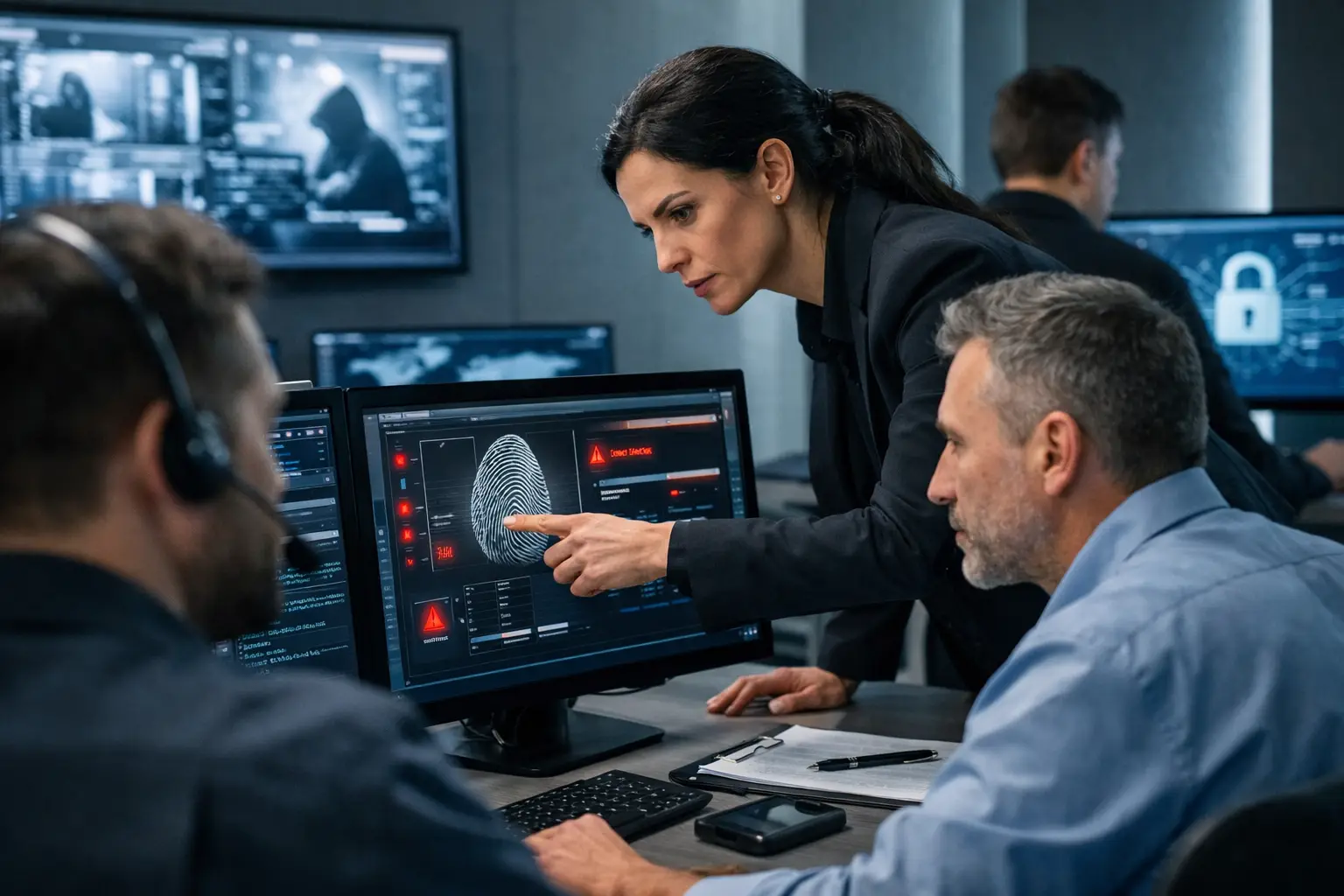
A threat report comes in at 6:42 a.m. An employee flags concerning behavior, a contractor uploads a photo from a restricted area, and an executive assistant requests a travel risk review before wheels up. None of these events should live in separate inboxes, text threads, and spreadsheets. Security incident case management exists to bring order to that moment – fast.
For security leaders, HR teams, workplace violence specialists, and executive protection professionals, the real issue is not whether incidents happen. It is whether your team can capture facts, assess risk, assign ownership, preserve evidence, and make defensible decisions under pressure. A case management process that is fragmented will slow response and weaken accountability. A disciplined system will do the opposite.
What security incident case management actually does
At its core, security incident case management is the operational framework for handling security events from first report to final resolution. That includes intake, triage, investigation, escalation, response coordination, documentation, and post-incident review. The goal is not just recordkeeping. The goal is control.
A good case management model creates a clear chain of action. Someone reports a concern. The system captures who reported it, what happened, where it occurred, what evidence exists, and who is responsible for the next step. Investigators and analysts can then assess severity, connect related incidents, and determine whether the case requires monitoring, intervention, law enforcement coordination, or closure.
This matters because most high-impact incidents do not begin as obvious emergencies. They begin as scattered signals – policy violations, behavioral concerns, threatening messages, access anomalies, suspicious surveillance, or travel-related warnings. Without a centralized case record, those signals are easy to dismiss in isolation.
Why fragmented workflows fail under pressure
Many organizations still manage incidents through a patchwork of email, shared drives, phone calls, and manual notes. That may feel workable during quiet periods. It breaks down when the volume rises or when an event becomes sensitive, time-critical, or legally significant.
The first problem is visibility. If the reporting channel is disconnected from the investigation file, decision-makers do not get a real-time view of status, escalation history, or unresolved actions. The second problem is consistency. Two analysts may handle similar incidents in very different ways because there is no structured workflow behind the process.
The third problem is evidence integrity. Photos, witness statements, chat screenshots, badge data, and analyst notes must stay attached to the case in a way that preserves chronology and context. If evidence is spread across personal folders or text messages, your team loses speed and credibility at the same time.
There is also a leadership risk. When executives ask what happened, what was known, who approved action, and whether there were prior indicators, weak case management produces partial answers. Strong case management produces an audit trail.
The building blocks of effective security incident case management
Not every organization needs the same workflow depth, but the fundamentals are consistent. Effective security incident case management starts with structured intake. Reports should come in through defined channels with fields that capture the basics without slowing the reporter down. Free-text narratives still matter, but they should sit inside a repeatable intake structure.
The next requirement is triage. Not every report deserves the same level of response. A suspicious person near a facility, a concerning employee communication, and an executive travel advisory each require different playbooks. The system should support severity scoring, incident categorization, and clear escalation thresholds.
Assignment and accountability come next. A case without an owner is a liability. Teams need to know who is reviewing the incident, who is approving next steps, and when follow-up is due. Timelines, tasking, and status changes should be visible without requiring extra meetings to recreate the picture.
Evidence management is equally critical. That means storing attachments, timestamps, call notes, interviews, location data, and supporting records in one case file. Just as important, the platform should preserve the order of events. In a later investigation, sequence often matters as much as content.
Finally, the system should support closure with discipline. Closing a case should not mean burying it. It should mean documenting findings, actions taken, residual risk, and whether trend monitoring or additional safeguards are needed.
Where case management supports prevention, not just response
Organizations often treat case management as a back-end administrative function. That is too narrow. When handled well, it becomes a prevention tool.
Patterns emerge when incidents are centralized. Repeated trespassing reports at one site may indicate a perimeter weakness. Multiple low-level conduct concerns tied to one individual may justify a deeper threat assessment. Travel incidents clustered by location may change protective planning for executives or field teams. These are not abstract analytics. They are operational signals.
This is where integrated intelligence matters. Case data gains value when it can be matched against location-based threats, external risk reporting, prior incidents, and analyst review. Technology can surface correlations, but human judgment still matters. A flagged pattern is only useful if someone with security experience can determine whether it reflects noise, misconduct, or a credible escalation path.
That hybrid model is one reason many organizations are moving away from stand-alone reporting tools. They need more than a digital filing cabinet. They need a system that helps translate information into action.
Security incident case management for different risk environments
The right setup depends on your operating environment. A corporate security team may prioritize workplace violence concerns, visitor incidents, and executive travel coordination. An HR-led process may focus more heavily on internal reporting, duty of care, and documentation discipline. A school or community safety team may need quick intake, multi-stakeholder visibility, and tighter emergency response workflows.
For executive protection, case management has its own demands. Protective teams need to log suspicious approaches, route deviations, online threats, travel disruptions, and protective intelligence updates in a format that supports both immediate action and long-term pattern analysis. The standard cannot be informal.
High-net-worth families and individual users also benefit from structured case handling, especially when they rely on SOS support, suspicious activity reporting, and verified threat monitoring. The scale may be smaller, but the requirement is the same: accurate records, timely escalation, and a clear path from alert to action.
What to look for in a case management platform
If you are evaluating platforms, start with operational fit rather than feature volume. A long feature list means little if your team cannot use the system quickly during a live incident.
Look for a platform that supports fast reporting, configurable workflows, role-based access, evidence upload, mobile usability, and clear case timelines. Analytics matter, but only if they help teams identify trends, repeat actors, response gaps, and unresolved exposure.
Integration also deserves close attention. Case management should not operate in isolation from your alerting tools, communications systems, travel risk processes, or broader security operations workflow. The more fragmented your stack, the more handoffs your team will have to manage manually.
There are trade-offs. Highly customized systems can mirror your process closely, but they may become harder to maintain. Simpler systems are easier to deploy, but they may force teams into rigid workflows that do not reflect real security operations. The right answer depends on your reporting volume, regulatory environment, staffing model, and incident profile.
The operational standard leaders should expect
A mature incident program does not rely on memory, heroics, or improvised coordination. It runs on documented process, controlled escalation, and a case record that reflects reality as events unfold. That standard protects people, but it also protects the organization when scrutiny follows.
Teams should be able to answer basic questions without delay. What happened. Who knew. What evidence was collected. What actions were taken. Was the incident linked to prior reports. Is there residual risk. If those answers take hours to assemble, the process is not ready.
This is why security incident case management deserves executive attention. It sits at the intersection of duty of care, threat detection, response coordination, and defensible documentation. In practical terms, it helps organizations move faster with fewer blind spots.
Risk Shield approaches this problem the way security operators do: centralize the signal, verify the facts, escalate with discipline, and keep every decision tied to a traceable case history.
The best case management system is not the one with the most screens. It is the one your team trusts when a report lands, the facts are incomplete, and the next decision carries real consequences.
