A safety team usually finds out its monitoring stack is weak at the worst possible moment – after a threat escalates, a lone worker misses a check-in, or an incident report lives in three different systems and nowhere useful. That is why evaluating the best workplace safety monitoring tools is not a software exercise. It is an operational decision about how quickly your organization can detect risk, verify what is happening, and act before a bad situation becomes a crisis.
For most organizations, the right answer is not a single feature or a flashy dashboard. It is a toolset that closes the gap between awareness and response. Some platforms are built for compliance logging. Others are better for environmental monitoring, lone worker protection, visitor management, access control, or active threat intelligence. The strongest options reduce blind spots, support disciplined escalation, and give security, HR, and operations teams a common operating picture.
What the best workplace safety monitoring tools actually do
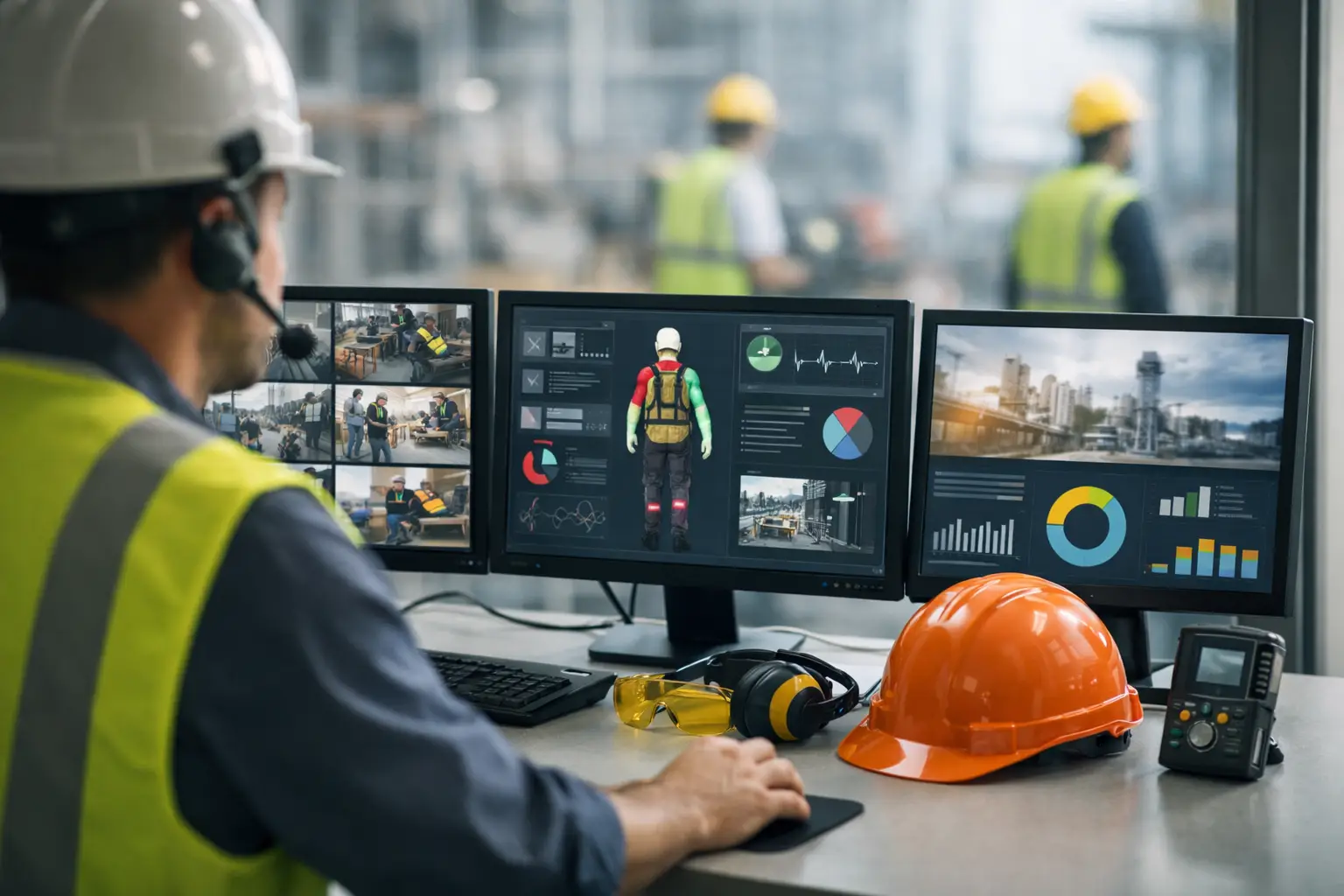
The best workplace safety monitoring tools do more than collect alerts. They help teams identify risk early, filter noise, document incidents, and coordinate decisions under pressure. In practical terms, that can mean monitoring facility conditions, tracking employee duress signals, flagging threatening communications, or centralizing case data so an investigation does not depend on scattered emails and screenshots.
This matters because workplace safety has changed. A traditional EHS platform may handle inspections and corrective actions well, but it may not help much with workplace violence indicators, travel risk, executive protection, or real-time emergency coordination. On the other hand, a pure physical security tool may generate alarms without giving HR, legal, and leadership the context they need to respond appropriately. The trade-off is rarely about which tool is best in the abstract. It is about which tool fits your risk profile and operating model.
A manufacturing site will prioritize sensors, wearables, and hazardous exposure alerts. A corporate campus may care more about access events, suspicious behavior reporting, and crisis communications. A healthcare system needs speed, documentation, and staff duress support. A smaller business may need broad coverage from one platform because it cannot afford five disconnected systems.
10 best workplace safety monitoring tools to consider
1. Integrated threat intelligence and incident management platforms
For organizations dealing with dynamic risk, this category is often the strongest choice. These platforms combine threat monitoring, analyst review, incident intake, escalation workflows, alerting, case management, and response coordination in one environment. The advantage is operational clarity. Security teams can move from signal to assessment to action without switching systems or losing time.
This model is especially valuable when threats are ambiguous at first. A troubling message, a regional disruption, or a pattern of concerning behavior does not always trigger a traditional alarm. It needs context, verification, and structured follow-through. Platforms that combine AI-driven detection with human review tend to perform better here because they reduce false positives without ignoring early warning signs.
2. Environmental health and safety software
EHS platforms remain a core part of workplace safety monitoring, especially in regulated industries. They are typically strong at inspections, hazard observations, corrective actions, audits, safety training records, and compliance reporting. If your biggest exposure is recurring operational safety issues, this software category deserves serious attention.
The limitation is that many EHS systems were not designed for fast-moving security threats. They can document incidents after the fact, but they may not provide real-time threat visibility or coordinated escalation. For some organizations, that is acceptable. For others, it leaves a dangerous gap.
3. Lone worker monitoring apps and wearables
If employees work in the field, travel alone, enter high-risk environments, or operate outside normal supervision, lone worker tools are essential. These systems usually include timed check-ins, panic alerts, fall detection, location sharing, and escalation if a user becomes unresponsive.
The best versions are easy to use under stress. That sounds obvious, but it is where many deployments fail. If the worker has to navigate multiple screens to trigger help, the tool is less useful when seconds matter. Battery life, location accuracy, and escalation reliability should weigh more heavily than cosmetic features.
4. Mass notification and emergency communication systems
When a facility lockdown, severe weather event, or active threat unfolds, communication speed becomes a safety control. Mass notification tools help organizations send alerts across text, voice, email, desktop, and app channels. Their value is straightforward: they move instructions fast and at scale.
Still, messaging alone is not a complete safety monitoring strategy. These tools are strongest when connected to verified incident workflows. Otherwise, teams may communicate quickly but without enough confidence in what is actually happening.
5. Access control and physical security monitoring systems
Badge data, forced-door alerts, visitor anomalies, and camera-linked events can reveal workplace risk before an incident fully develops. Physical security systems are foundational for site awareness, especially in offices, schools, healthcare facilities, and critical infrastructure environments.
The challenge is that raw physical security data can be noisy. A door held open is not always a threat. A late-night access event might be authorized. Systems become more valuable when they connect those signals with case history, employee concerns, and broader threat indicators instead of treating each event in isolation.
6. Incident reporting and case management platforms
A strong reporting and case management system gives employees a way to report concerns, preserves evidence, documents actions taken, and supports defensible investigations. For HR, legal, and corporate security teams, this is often where prevention either gains traction or breaks down.
A report that sits in email is easy to miss. A case file with timestamps, attachments, escalation history, and assigned owners is much harder to lose. If your organization is trying to improve accountability, trend detection, and cross-functional response, this category has immediate value.
7. Workplace violence assessment tools
Not every organization needs a specialized violence assessment capability, but those with elevated duty-of-care demands should not overlook it. These tools help evaluate threatening behavior, score concern levels, centralize behavioral indicators, and support intervention planning.
Their real value is discipline. They give teams a structured method for handling ambiguous but concerning behavior. That matters because overreaction creates disruption, while underreaction creates exposure. Good tools support consistent judgments instead of purely subjective calls.
8. Occupational IoT sensors
Sensors for air quality, temperature, noise, chemical exposure, machine conditions, and confined space risk are highly effective in industrial and operational settings. They provide continuous monitoring where manual checks are too slow or inconsistent.
However, sensor data needs a response path. If an alert goes nowhere, monitoring becomes a record of failure rather than a layer of protection. The strongest deployments tie sensor alerts to incident workflows, supervisor escalation, and documented corrective action.
9. Travel risk and location monitoring tools
For organizations with mobile staff, executives, or field teams, location-based risk visibility can be just as important as building safety. These platforms track regional threats, disruptions, and employee locations so security teams can issue targeted advisories or check on exposed personnel.
This category is often underestimated by companies that think workplace safety ends at the office door. It does not. Duty of care follows employees into travel, off-site meetings, and distributed operations.
10. Unified protection platforms
The most mature option is a unified platform that brings together threat intelligence, SOS support, case management, evidence capture, analytics, and escalation workflows. Instead of forcing teams to stitch together separate tools for monitoring, reporting, and response, it creates one operating environment.
That is a meaningful advantage for organizations with complex risk exposure. It shortens handoffs, improves documentation, and gives decision-makers a more accurate picture during fast-moving events. Risk Shield fits this category, combining AI-driven monitoring with human-verified analyst support for organizations that need both speed and judgment.
How to choose the right workplace safety monitoring tool
Start with your operating risk, not the vendor demo. If your main problem is OSHA documentation, buy for compliance depth. If your concern is workplace violence, executive movement, or active incident coordination, prioritize intelligence, escalation, and case management. Many teams make the mistake of buying the tool with the most features instead of the one that best matches their actual threat environment.
Next, test response flow. Ask what happens after an alert appears. Who verifies it, who owns the next action, how evidence is attached, how leadership is notified, and how the case is closed. A platform that detects risk but relies on manual patchwork during escalation will struggle when pressure rises.
Integration also matters, but not every integration is equally useful. A connection to access control, communications, HR records, or mobile SOS can be operationally important. An integration that exists only for marketing value is less relevant. The question is whether the data connection improves detection, response time, or accountability.
Usability should be judged in the field, not in a conference room. Employees need reporting tools they will actually use. Analysts need workflows that support triage instead of slowing it down. Executives need clear visibility without being buried in technical noise. If the system creates friction, adoption will drop and blind spots will return.
Where buyers often get it wrong
One common mistake is separating safety, security, and incident management into unrelated purchases. That structure may reflect internal departments, but risk does not care about org charts. A threatening employee message, a badge anomaly, and a prior HR complaint may all be part of the same pattern.
Another mistake is overvaluing alert volume. More alerts do not equal more protection. In many environments, they create fatigue. The better measure is whether the tool helps your team identify credible threats faster and respond with discipline.
Price should be considered in the context of operational consequence. The cheaper system can become the expensive choice if it misses escalation, loses evidence, or forces teams into manual coordination during an emergency.
The strongest workplace safety monitoring approach is the one that gives your team reliable visibility before, during, and after an incident. Buy for prevention, buy for response, and buy for the reality that most critical events do not announce themselves clearly at the start.
