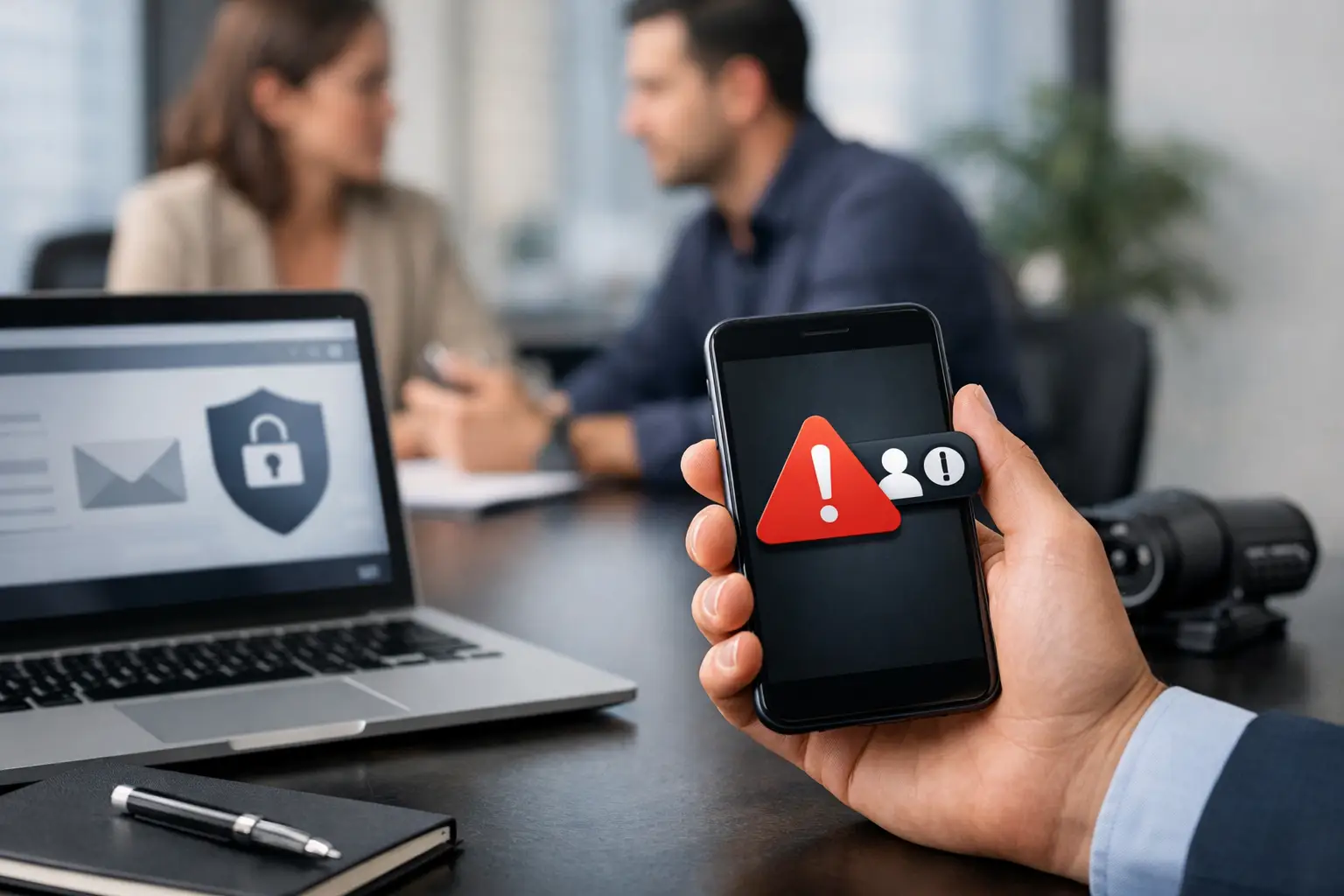
Most organizations do not fail because a warning sign never existed. They fail because the signal was scattered across HR notes, manager concerns, badge access anomalies, anonymous tips, and informal conversations that never reached the right decision-maker. An employee threat reporting system closes that gap by giving organizations a structured way to capture concern, assess credibility, and escalate action before risk becomes harm.
For security leaders, HR teams, legal counsel, and workplace violence prevention stakeholders, this is not a software convenience. It is an operational control. When reporting is inconsistent, response becomes inconsistent. That creates exposure for employees, leadership, and the organization itself.
What an employee threat reporting system actually does
At its core, an employee threat reporting system provides a central intake point for behavior-based concerns, direct threats, suspicious activity, policy violations with violence indicators, and other warning signs that may point to workplace risk. The system should do more than collect reports. It should support triage, documentation, escalation, and coordinated response.
That distinction matters. A basic hotline or generic incident form may capture information, but it often stops there. Security teams still have to chase context across email threads, spreadsheets, and disconnected case files. In a time-sensitive situation, fragmented workflows slow judgment and increase the chance that something critical gets missed.
A mature reporting system creates a repeatable process. Employees know where to report. Managers know what gets escalated. Investigators and threat assessment teams can review evidence in one place. Leadership can see patterns that would be invisible in isolated reports.
Why organizations need more than an anonymous tip line
Anonymous reporting has value. It lowers the barrier for employees who are afraid of retaliation or unsure whether a concern is serious enough to raise. But anonymity alone does not equal preparedness.
A practical employee threat reporting system needs to support different reporting paths because not every incident looks the same. Some employees want confidentiality, not full anonymity. Some incidents require immediate identification for witness follow-up. Others involve digital evidence, prior case history, or location-specific concerns that need to be attached from the start.
This is where many organizations underestimate the problem. They treat reporting as a communications issue instead of a risk operations issue. If the system cannot document evidence, route cases by severity, preserve timelines, and support defensible decision-making, it may produce more noise than clarity.
An effective system also helps reduce false positives without dismissing legitimate concern. That balance is critical. Overreaction erodes trust. Underreaction creates liability and danger. The right reporting structure gives teams enough context to assess threat indicators with discipline rather than instinct alone.
The operational components that matter most
A useful employee threat reporting system starts with accessible intake. Employees, contractors, and in some cases third parties need a clear path to report concerning behavior from a phone or desktop. If reporting requires too many steps or too much confidence in internal politics, people stay quiet.
From there, intake should feed into structured case management. That means reports are time-stamped, categorized, and enriched with supporting material such as screenshots, messages, photos, witness notes, or prior incident references. Centralized documentation is not just an administrative benefit. It preserves the chain of information that investigators and legal teams may later need.
Escalation logic is equally important. A report about troubling comments may require review by HR and security. A report involving a direct threat, stalking behavior, weapons concern, or targeted grievance may require immediate threat assessment and executive notification. Systems that treat every submission the same tend to bury urgent cases in general workflows.
Analytics also play a larger role than many buyers expect. Trend visibility can reveal repeated complaints tied to one individual, one facility, one department, or one behavioral pattern. A single report may not trigger action. Three related reports over six weeks should not remain invisible.
Finally, response coordination matters. Reporting systems are strongest when they connect reporting to action – investigator assignment, interviews, protective measures, law enforcement coordination when needed, and documented case closure. Intake without response discipline can create a dangerous illusion of control.
Employee threat reporting system design mistakes
The most common mistake is building the program around compliance language instead of user behavior. Employees do not report because a policy manual exists. They report when they trust the process, understand the threshold, and believe someone competent will act.
Another mistake is isolating reporting inside one department. HR may own employee conduct. Security may own threat monitoring. Legal may control sensitive investigations. IT may hold digital evidence. In practice, workplace threat cases often cross all four. A system that cannot support shared visibility with controlled permissions becomes a bottleneck.
Many organizations also fail at classification. They collect broad incident data but do not distinguish between routine misconduct, threatening communications, ideologically motivated behavior, domestic spillover risk, or escalating workplace grievance indicators. Those are different risk types. They require different expertise and different intervention paths.
There is also a timing problem. Some systems are designed for case logging after an event, not active prevention before one. If employees report concerning fixation, intimidation, or targeted hostility, the process needs to support early assessment, not just post-incident recordkeeping.
How to evaluate an employee threat reporting system
The right evaluation question is not, “Can this collect reports?” Nearly any tool can do that. The better question is, “Can this help our team move from signal detection to informed action under pressure?”
Start with intake flexibility. The system should support named and anonymous reporting, mobile-friendly submission, evidence upload, and clear category selection without overwhelming the user. Too many fields discourage reporting. Too few fields produce weak intelligence.
Then examine triage capability. Can reports be prioritized by threat indicators, urgency, location, or person of interest? Can the right teams be alerted quickly? Can the platform separate low-level noise from cases that need immediate attention?
Next, look at case management depth. You need audit trails, role-based access, timeline tracking, internal notes, status changes, and documentation that holds up under review. Security incidents often become legal, regulatory, or reputational events. Records matter.
Integration is another deciding factor. An employee threat reporting system is far more useful when it connects with broader monitoring, emergency response, access control context, and incident workflows. Threat reporting should not sit in a vacuum while the rest of the security operation runs elsewhere.
Human analysis also deserves attention. Automation can assist with speed and pattern recognition, but serious threat reports still require experienced judgment. Behavioral context, credibility assessment, and escalation decisions are not areas where organizations should rely on automation alone.
That is why many mature programs now favor a hybrid model – technology for intake, visibility, and workflow, backed by trained analysts or security professionals who can verify signals and support response decisions.
Adoption determines whether the system works
Even a strong platform fails if employees do not use it. Adoption depends on communication, training, and leadership posture.
Employees need plain guidance on what to report. Not every concern will be a confirmed threat, and that is fine. The standard should be based on concerning behavior, not certainty. People are more likely to report when they know they are not expected to diagnose risk on their own.
Managers need separate training because they often receive the first disclosure. If they rely on informal conversations or delay escalation while trying to “handle it internally,” reporting discipline breaks down.
Leadership also sets the tone. If employees believe reports disappear into a black box, trust declines fast. Organizations do not need to share sensitive investigative details, but they do need to demonstrate that reports are reviewed, acted on, and treated seriously.
From reporting to prevention
The strongest employee threat reporting system does not end at the inbox. It becomes part of a broader protection strategy that includes threat monitoring, workplace violence assessment, incident documentation, emergency escalation, and post-incident learning.
That broader view matters because employee risk rarely appears as a single isolated event. It often develops through behaviors, triggers, communications, access patterns, grievances, or external stressors that only make sense when seen together. Centralized reporting helps organizations build that picture earlier.
For teams responsible for employee protection, that shift is significant. You move from fragmented reporting and reactive case handling to a more intelligence-led process. You gain earlier visibility, cleaner escalation paths, and stronger documentation when decisions have to be made quickly.
Platforms built for serious security operations, including solutions such as Risk Shield, are increasingly designed around that reality – not just collecting reports, but helping organizations verify, assess, and act with discipline.
If your current process depends on scattered emails, verbal handoffs, or a hotline that stops at intake, the issue is not convenience. It is whether your organization can recognize a threat pattern early enough to intervene while there is still time.
