
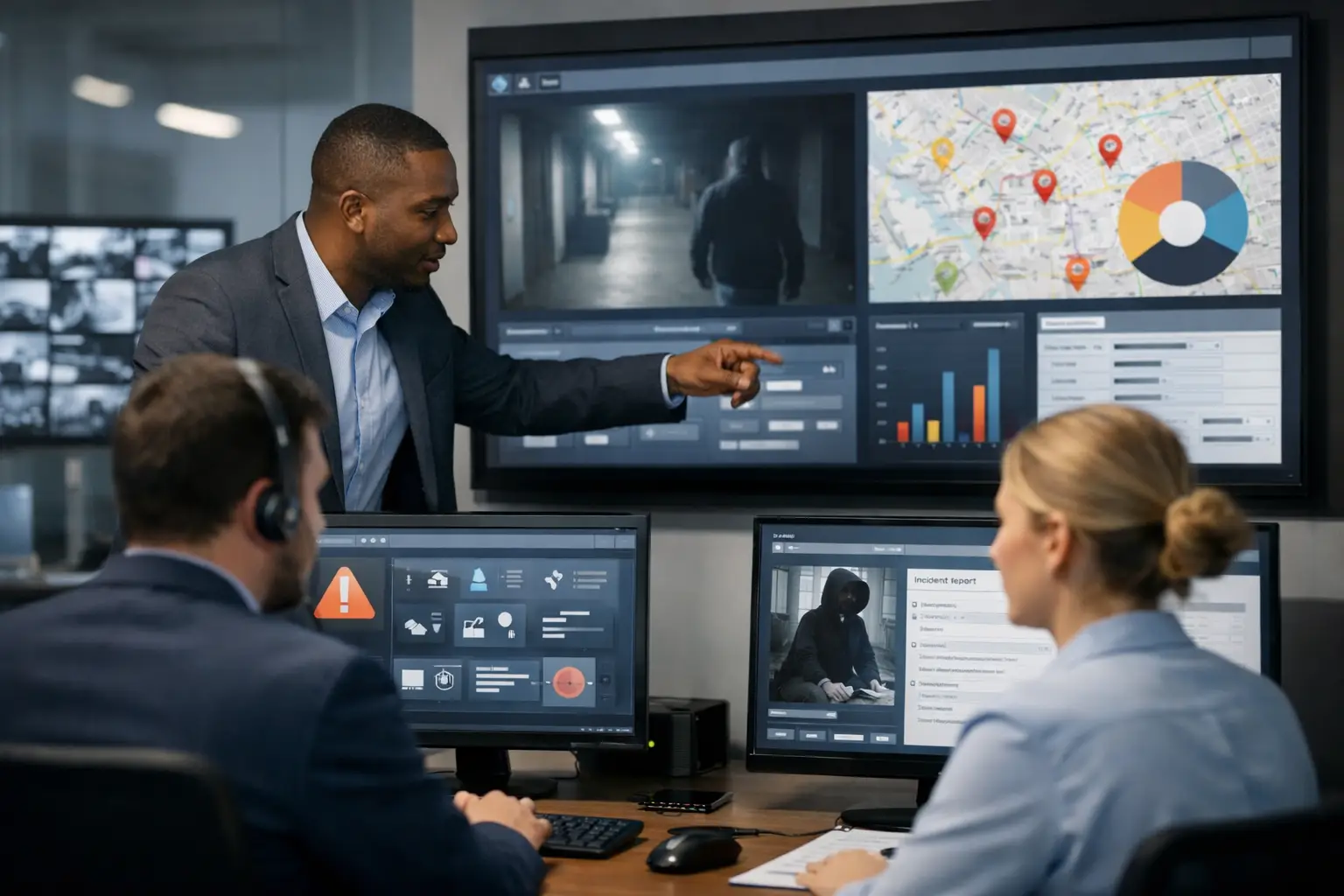
A troubling message, a stalking concern, an escalating employee conflict, or a report of a weapon cannot wait for a scattered email chain. The best workplace threat reporting systems give employees a clear way to raise concerns, then give security, HR, legal, and leadership the intelligence needed to assess, document, and act before a situation becomes a crisis.
For organizations responsible for employee protection, the question is not whether reports will arrive. They will. The question is whether those reports enter a controlled process with defined ownership, verified facts, appropriate escalation, and a defensible record of every decision.
What Makes a Threat Reporting System Effective
A reporting tool alone is not a threat management system. A basic hotline, shared inbox, or anonymous form may capture information, but it often breaks down once multiple teams need to coordinate. The strongest systems connect reporting to triage, case management, evidence handling, notifications, and response actions.
That connection matters because workplace threats rarely present as a single, obvious event. One report may concern an employee’s social media posts. Another may describe repeated unwanted contact in a parking area. A third may reveal a pattern of conduct already known to a manager. Without a central case record, those signals remain fragmented and the organization loses the ability to see escalation.
The best platforms make reporting accessible without making the review process loose or unaccountable. Employees need enough confidence to speak up. Security teams need structured information, timestamps, attachments, and a reliable chain of action. Leaders need visibility into risk trends without unrestricted access to sensitive case details.
Core Capabilities of the Best Workplace Threat Reporting Systems
A capable system begins with flexible intake. Employees, contractors, visitors, and third parties may need different ways to submit information. Mobile reporting, web forms, anonymous reporting options, monitored hotlines, and direct security submissions each have a role. The objective is to remove friction at the point of reporting while collecting enough context for an informed initial assessment.
Intake forms should guide reporters to provide the essentials: who is involved, what happened, when and where it occurred, whether there is an immediate danger, and what evidence is available. Free-text narratives remain necessary, but structured fields allow teams to sort and prioritize reports quickly.
Evidence management is equally important. Screenshots, photographs, videos, emails, call logs, witness statements, and documents should attach to the relevant case without forcing staff to pass sensitive materials through personal devices or unsecured file-sharing channels. The system should preserve timestamps, access history, and the relationship between evidence and investigative findings.
The most operationally useful platforms also provide the following capabilities:
- Risk-based triage that distinguishes routine concerns from time-sensitive threats requiring immediate review.
- Configurable escalation workflows for security, HR, legal counsel, executive protection, emergency services, and leadership.
- Case notes, assignments, status tracking, and decision logs that establish accountability across the response lifecycle.
- Location-aware visibility for incidents affecting offices, campuses, travel routes, executive residences, or distributed workforces.
- Reporting and analytics that expose repeat subjects, recurring locations, unresolved cases, response times, and emerging behavior patterns.
- Integration options for identity systems, emergency notification tools, access control, security operations, and other enterprise platforms.
No platform replaces judgment. It should give trained personnel a faster, clearer operating picture and make the assessment process more consistent.
Reporting Must Lead to Triage, Not a Dead End
The difference between a reporting portal and a protection program is what happens after submission. High-risk reports require an escalation path that is known before the emergency occurs. A report alleging a credible threat of violence should not sit in the same queue as a facilities complaint or a low-level policy concern.
Effective workflows assign urgency based on observable indicators, available context, and the potential for harm. That may include direct threats, fixation, stalking behavior, access to weapons, recent losses, boundary violations, targeted communications, or threats connected to a specific place and time. Teams should avoid treating any single indicator as automatic proof of intent. Threat assessment is contextual, and escalation decisions must account for behavior, capability, stressors, access, and protective factors.
A strong system supports this work by routing urgent cases to authorized personnel immediately, creating time-stamped tasks, and documenting every action taken. When a case requires law enforcement coordination, welfare checks, emergency response, or protective measures, the record should show what was known, who made the decision, and when the response occurred.
Anonymous Reporting Requires Careful Design
Anonymous reporting can surface concerns that employees would otherwise withhold. It is particularly useful where employees fear retaliation, are uncertain whether conduct is serious enough to report, or have observed behavior involving a supervisor or senior leader.
It also has limits. An anonymous report may lack enough detail to assess credibility, and investigators may need a secure method to ask follow-up questions without revealing the reporter’s identity. The best workplace threat reporting systems support two-way anonymous communication, allowing reviewers to request clarification while protecting the source.
Organizations should state clearly how anonymity works, what information may still be visible to system administrators, and when confidentiality cannot be guaranteed. Overpromising secrecy damages trust. A disciplined policy is more credible: reports are handled on a need-to-know basis, reviewed promptly, and protected from retaliation.
How to Evaluate Workplace Threat Reporting Systems
Start with your operating model, not a feature checklist. A large enterprise with multiple sites, travel exposure, and a dedicated corporate security team needs different controls than a regional employer whose HR leader and outsourced security partner share responsibility. The right platform must fit the people who will receive alerts at 2:00 a.m., review evidence, authorize protective action, and close the case.
Assess how the system handles role-based access. HR may need visibility into workplace conduct and accommodation issues, while corporate security may need incident details, location data, and protective intelligence. Legal teams may require restricted access to privileged material. A platform that gives everyone full visibility creates privacy and liability concerns; one that walls off essential information can delay protective action.
Examine the escalation engine closely. Can it notify the right team based on severity, location, subject, business unit, or incident type? Can it require acknowledgment, escalate when no one responds, and preserve the timeline? Does it support emergency instructions and SOS functionality for personnel facing an immediate safety concern?
Also test the quality of its reporting. Leaders should be able to identify where incidents are concentrated, whether concerns are rising, which cases remain open beyond target timelines, and whether certain behaviors recur across locations. Analytics should support prevention, not merely produce monthly activity counts.
AI can assist with categorization, duplicate detection, pattern recognition, and prioritization. But workplace threat decisions carry human consequences. Automated signals should be reviewed by qualified personnel, particularly when they influence disciplinary action, law enforcement contact, access restrictions, or executive protection measures. Risk Shield’s AI-plus-human approach reflects this operational reality: technology can accelerate detection, while trained analysts help validate information and guide escalation.
Build the Workflow Before You Launch
A new platform will not solve unclear authority. Before launch, establish who owns intake, who performs initial screening, who leads threat assessment, who can contact law enforcement, and who communicates with affected employees. Define response targets for urgent, elevated, and routine reports. Then train employees on what to report and train reviewers on how to document decisions without speculation or unsupported conclusions.
A pilot program can reveal where workflows fail. Test an anonymous report, a report with multiple attachments, an after-hours emergency, a case involving a senior employee, and an incident that requires HR and security coordination. If the process depends on someone remembering whom to call, it is not ready.
The Right System Creates a Defensible Security Record
When an organization faces scrutiny after an incident, it must be able to demonstrate more than good intentions. It needs a clear record showing that concerns were received, assessed, escalated appropriately, and resolved or monitored according to policy. That record protects employees, informs leadership, and strengthens the organization’s ability to improve its prevention posture.
Choose a system that makes it easier for people to report early, easier for trained teams to act decisively, and harder for meaningful warning signs to disappear between departments. Preparedness is built one documented decision at a time.
