A troubling message sent at 11:48 p.m., a badge-access anomaly before dawn, a manager’s report of escalating behavior – none may justify an emergency response alone. Together, they may signal an emerging threat. The future of workplace threat detection is the ability to recognize that pattern early, assess it with discipline, and put the right people into action before a situation becomes a crisis.
For security leaders, HR teams, executive protection professionals, and workplace safety stakeholders, the challenge is no longer simply collecting more alerts. It is separating meaningful indicators from background noise, preserving evidence, respecting privacy, and coordinating a response that protects people without creating unnecessary disruption.
The Detection Model Is Shifting From Alarms to Intelligence
Traditional workplace security has often been organized around separate functions. Physical security monitors access control and cameras. HR manages conduct and employee relations concerns. Corporate security tracks external risks. Legal, IT, and executive leadership may become involved only after an incident has escalated.
This fragmented model leaves critical context in different systems and different inboxes. A concerning social media post may not reach the team reviewing a recent restraining order disclosure. A repeated access issue may be treated as an administrative problem rather than considered alongside a reported conflict. The result is delayed recognition, incomplete assessment, and reactive decision-making.
The next generation of threat detection connects those signals into a defensible operating picture. It does not assume every alert is a threat. It identifies what deserves review, adds context, documents the assessment, and supports escalation according to established protocols.
That distinction matters. Security teams do not need an endless stream of unverified data. They need relevant intelligence that answers operational questions: Who may be at risk? What changed? Where is the exposure? What action is proportionate now?
The Future of Workplace Threat Detection Requires Signal Correlation
A single data point rarely tells the full story. A credible detection program correlates information across authorized sources, including incident reports, employee concerns, access-control events, location-based risks, open-source indicators, case history, and protective intelligence.
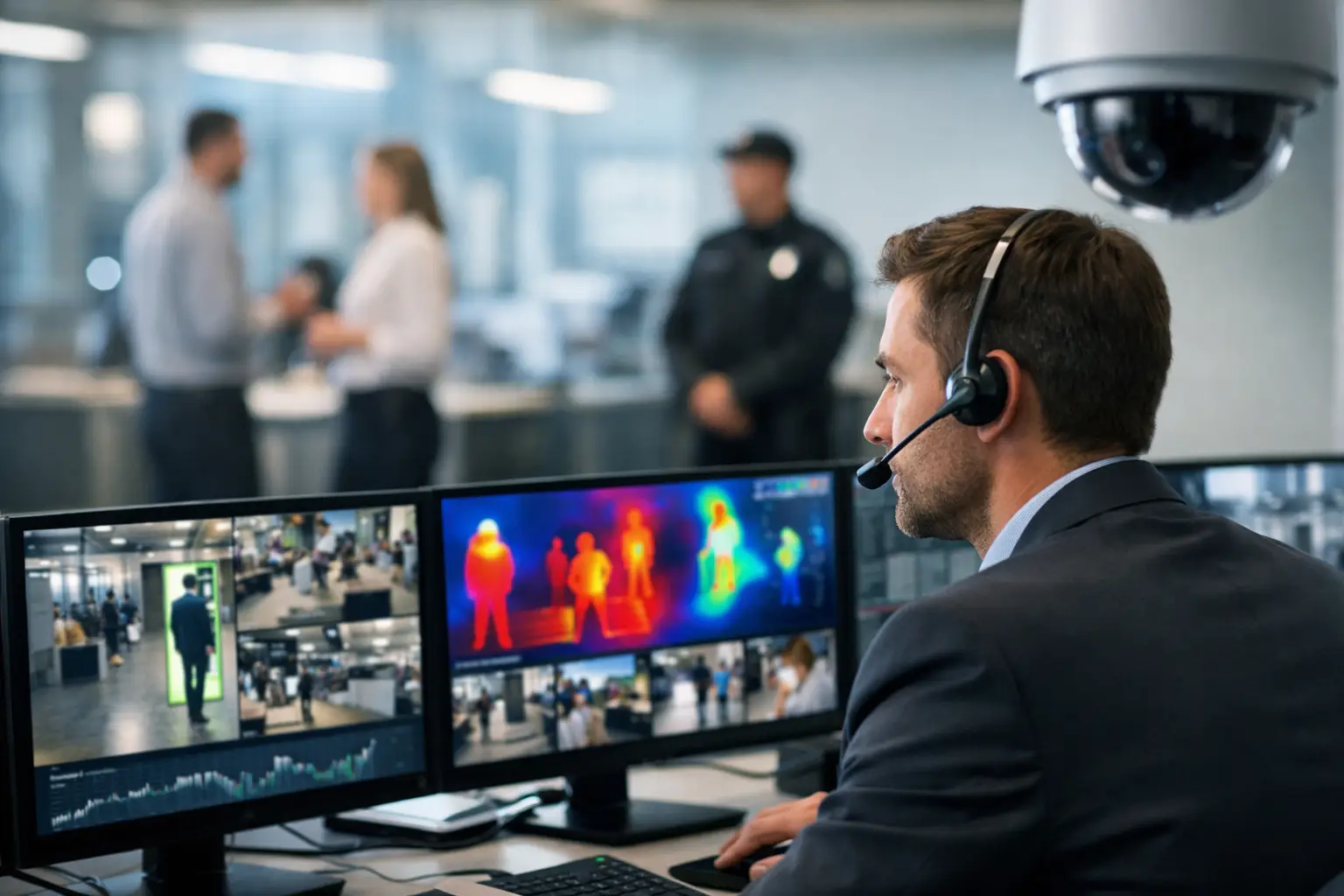
Artificial intelligence will play an increasingly important role in this work. It can identify repetitive language in reports, recognize unusual event patterns, prioritize cases based on defined risk factors, and surface connections that a busy team may miss. It can also help teams organize large volumes of incoming information during rapidly developing events.
But AI should not become the final decision-maker in a workplace violence assessment or executive protection matter. Context changes meaning. A phrase that appears threatening in isolation may be satire, frustration, or a protected expression. Conversely, behavior that appears minor in one system may carry greater weight when paired with fixation, grievance, recent loss, access, or a history of escalation.
That is why human verification remains essential. Experienced analysts, investigators, and threat assessment professionals can test credibility, evaluate behavioral indicators, identify gaps in information, and recommend a measured path forward. The strongest model is not AI versus human judgment. It is AI-supported detection with accountable human review.
Reducing False Positives Without Ignoring Risk
False positives waste time, damage trust, and can lead teams to ignore the next alert. False negatives can place employees, visitors, and executives in danger. There is no setting that eliminates both risks, which is why detection programs must be calibrated to the organization’s environment, workforce, threat profile, and response capacity.
A hospital, manufacturing facility, headquarters campus, school, and distributed remote workforce will not use the same indicators or thresholds. A mature program establishes clear criteria for triage, assigns ownership for review, and records why a case was closed, monitored, escalated, or referred for additional assessment. This creates consistency while allowing trained personnel to apply judgment.
Location Intelligence Will Make Risk More Actionable
Threat detection is not only about a person or a message. It is also about place. A credible threat near a corporate office requires a different response than the same threat near an executive’s residence, a travel destination, a retail site, or a public event.
Location-based intelligence gives security teams the ability to see risk in relation to facilities, personnel movements, planned events, and protected individuals. It can help identify proximity concerns, civil unrest, severe weather, crime patterns, suspicious activity near a site, and emerging incidents that could affect operations.
The practical value is speed. When leaders can see a developing risk on a map alongside relevant assets and cases, they can make faster decisions about protective coverage, travel changes, facility posture, employee communications, or emergency activation. For executive protection teams, this visibility turns static itineraries into living risk assessments.
Location awareness must still be governed carefully. Organizations should define what data is collected, who can access it, how long it is retained, and when monitoring is appropriate. Protection cannot depend on vague policies or uncontrolled surveillance. Clear purpose, legal review, access controls, and documented escalation standards are part of operational discipline.
Detection Only Matters When Response Is Coordinated
An alert without an assigned action is not protection. The most advanced analytics will fail if teams cannot quickly determine who owns the incident, what information is verified, and what must happen next.
Future-ready programs will combine detection with centralized case management. Each concern should have a documented record of the initial report, evidence, assessment notes, involved stakeholders, protective actions, communications, and final disposition. This protects continuity when shifts change, personnel leave, or a case reopens months later.
A coordinated workflow also reduces the risk of informal decision-making. Rather than relying on scattered text messages and memory, teams can follow defined steps for triage, threat assessment, welfare checks, law enforcement coordination, HR engagement, legal review, and protective measures. The exact process depends on the organization, but the need for one source of truth does not.
For active or rapidly escalating situations, response tools must support immediate action. SOS functionality, live incident updates, evidence uploads, emergency notifications, and escalation paths can help security teams move from awareness to coordinated response. The goal is not to replace emergency services or trained responders. It is to ensure the organization has accurate information, assigned roles, and a documented operating picture while those responders engage.
Prevention Will Depend on Earlier, Better Reporting
Technology cannot detect information that never reaches the right team. Employees, contractors, families of protected individuals, and frontline managers need a trusted way to report concerns before behavior reaches a breaking point.
Many warning signs are first seen by people outside the security function: persistent unwanted contact, escalating grievance, unusual fixation, domestic violence spillover, threatening communications, concerning comments, or attempts to bypass normal access. People often hesitate to report because they fear retaliation, believe the issue is too minor, or do not know where to go.
A credible reporting program makes expectations clear. It explains what to report, how information will be handled, what privacy limits exist, and what employees can expect after submitting a concern. It also gives managers practical guidance so they do not attempt to investigate complex threats alone or dismiss behavior that requires assessment.
The cultural objective is not suspicion. It is informed vigilance. Teams should be encouraged to report observable behavior and facts, not diagnose colleagues or make unsupported claims. Security and HR can then assess the information through established procedures.
Building a Program That Can Scale Under Pressure
Organizations should begin by mapping their current detection and response process. Identify where reports enter, where evidence is stored, who reviews threats, how external intelligence is monitored, and where handoffs break down. The gaps are often operational rather than technological: unclear ownership, inconsistent documentation, delayed escalation, or no common view of risk.
Next, define the minimum information needed to assess a report and establish risk-based workflows. Low-level concerns may require documentation and monitoring. Higher-risk cases may require a multidisciplinary threat assessment team, protective measures, executive notification, or law enforcement coordination. What matters is that the escalation path is clear before the emergency occurs.
Finally, test the system under realistic conditions. Conduct tabletop exercises involving HR, security, legal, facilities, communications, and leadership. Test after-hours reporting, executive travel disruptions, facility threats, employee welfare concerns, and evidence preservation. A plan that works only during business hours with every decision-maker available is not a plan built for real risk.
Platforms such as Risk Shield are designed around this operating reality: AI-driven monitoring and location intelligence supported by human-verified analysis, centralized case management, and tools for rapid escalation. The technology is valuable because it supports a disciplined protection program, not because it adds another dashboard.
The organizations best prepared for tomorrow’s workplace threats will be those that treat detection as a continuous protective function. They will give their people a way to speak up, give trained teams the context to assess risk, and give leaders the operational control to act before warning signs become headlines.
