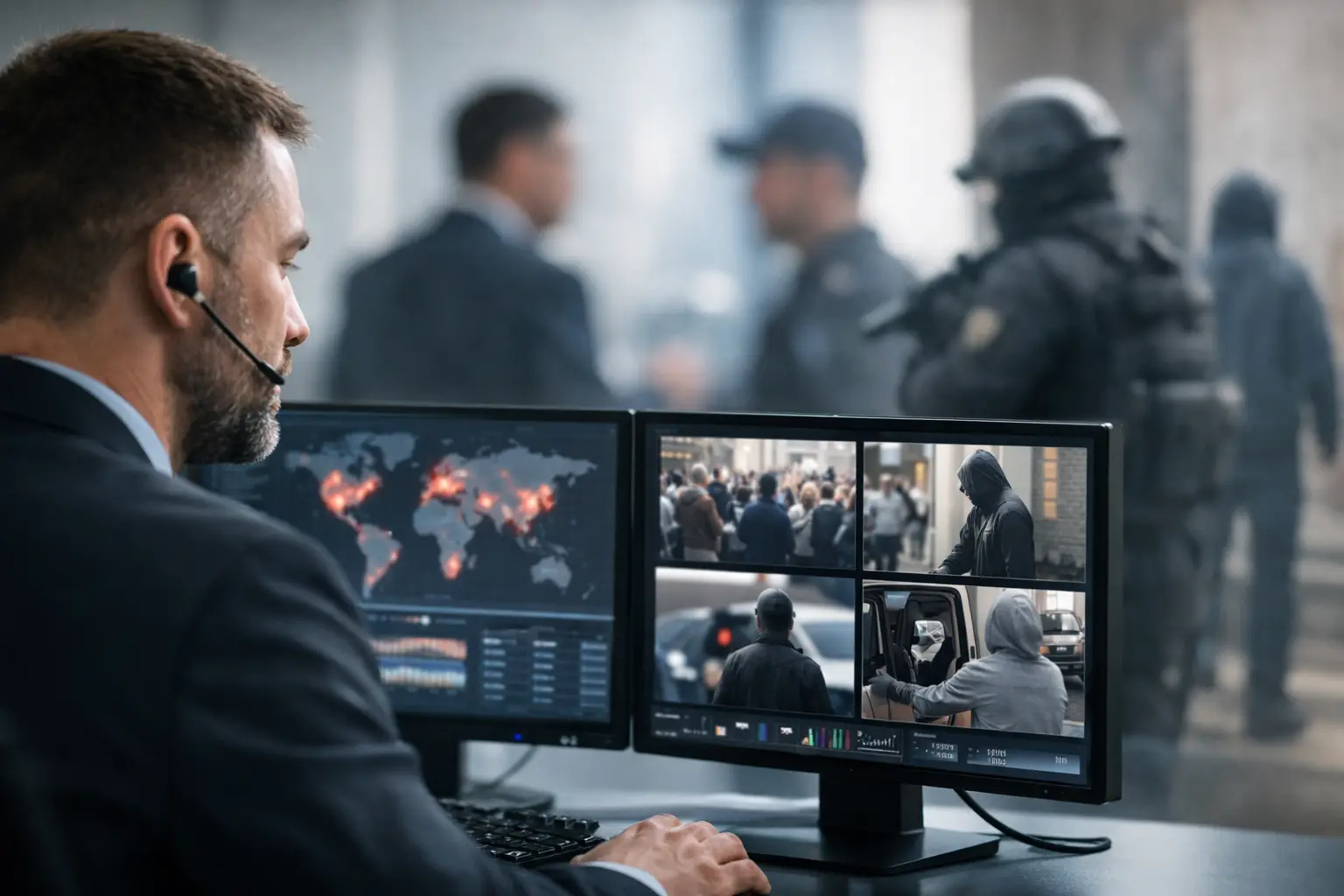
A concerning message is posted at 10:43 p.m. A supervisor notices an employee’s behavior has changed. A family member reports a threat that feels vague but personal. None of these signals, on their own, tells a security team exactly what will happen next. Together, they may create the warning picture that allows an organization to act before a situation becomes violent.
Can threat intelligence prevent violent incidents? It can materially improve the odds of prevention when it turns scattered signals into a verified assessment, a clear decision, and a documented response. It cannot predict violence with certainty or replace trained judgment. Its value is earlier visibility: giving the right people enough credible information to assess risk, intervene proportionately, and protect those who may be exposed.
Prevention Starts Before an Incident Is Obvious
Violent incidents rarely begin with a single, unmistakable warning. More often, risk develops across disconnected channels: threatening communications, escalating grievances, concerning online activity, unwanted contact, access issues, prior incidents, or changes in behavior reported by colleagues, friends, or family.
The operational challenge is that these signals often sit in separate places. HR may have a conduct complaint. Corporate security may have an access-control concern. An executive protection team may see hostile online language. Local leaders may hear about a confrontation but have no formal case record. When information stays fragmented, teams are forced to make high-stakes decisions with an incomplete picture.
Threat intelligence brings those fragments together. It identifies relevant signals, establishes context, evaluates credibility, and routes findings to people authorized to act. This is not about treating every troubling statement as proof of intent. It is about recognizing patterns early enough to manage risk before a threat becomes an emergency.
How Threat Intelligence Helps Prevent Violent Incidents
Effective intelligence-led protection operates as a disciplined cycle, not a one-time alert. Collection, verification, assessment, escalation, intervention, and review must connect. A tool that only produces alerts can create noise. A process that only begins after an incident has occurred is already behind the threat.
Detecting Relevant Signals Across Physical and Digital Environments
A credible threat picture may include direct threats, fixation on a person or location, repeated unwanted communications, doxxing, targeted harassment, concerning travel indicators, attempts to obtain access, or escalation after a disciplinary action. Context matters. A hostile post from an anonymous account is different from a direct message that includes a target’s schedule, workplace location, and intent to confront them.
Location-based intelligence is especially important. A threat may be more urgent when the subject is near a protected site, event, residence, or executive travel route. Conversely, a broad online reference without proximity, access, or corroborating behavior may warrant monitoring rather than an immediate operational response.
The objective is not broad surveillance for its own sake. It is focused visibility into credible risk indicators that affect people, facilities, and operations.
Verifying Before Escalating
False positives drain attention and can cause organizations to overreact. That is why human verification remains central to serious threat intelligence programs. Automated systems can identify volume, speed, keywords, entities, and patterns that teams might otherwise miss. Experienced analysts and trained assessors determine whether the information is authentic, relevant, current, and connected to a real exposure.
Verification may involve confirming identity, checking dates and locations, reviewing source reliability, comparing communications against known prior behavior, and distinguishing rhetoric from a developing pathway toward violence. Analysts should also document what is unknown. Uncertainty is not a reason to ignore risk, but it should shape the level of response.
This hybrid model reduces two failures at once: missing meaningful warning signs and overwhelming decision-makers with unverified noise.
Assessing Threat, Vulnerability, and Protective Options
Threat assessment is not a prediction engine. It is a structured process for evaluating whether concerning behavior indicates a credible risk and what actions can reduce exposure. A person may present a high level of concern because of escalating language, target specificity, access, history, capability, or recent stressors. Yet the appropriate intervention may still differ based on the target’s vulnerability and the available protective measures.
For example, an employee who makes a vague online threat after separation from the company may require outreach, monitoring, access review, and a documented safety plan. A former employee who identifies a specific manager, references a location, and attempts to enter a restricted facility may require immediate law enforcement coordination, enhanced protection, and a broader workplace response.
Good assessment avoids simplistic labels. It asks operational questions: Who may be at risk? What is the subject’s connection to the target? Has behavior escalated? What access exists? What protective action is justified now? Who owns the next decision?
Intelligence Only Works When Escalation Is Defined
A verified alert has limited value if nobody knows who receives it, how quickly they must act, or what actions they can authorize. Prevention depends on predetermined escalation workflows that connect intelligence to operational control.
For many organizations, that means security, HR, legal, leadership, facilities, and executive protection teams need defined roles before a case emerges. They do not need identical access to every detail. They do need a shared process for preserving evidence, documenting decisions, managing communications, and updating protective measures as circumstances change.
A functional workflow should establish four essentials:
- Severity thresholds that distinguish monitoring, urgent assessment, and emergency action.
- Named decision-makers and backups for after-hours escalation.
- Secure case documentation that records evidence, actions, and rationale.
- Response options, including welfare checks, access changes, protective details, employee support, emergency notifications, and law enforcement engagement.
These controls prevent a common failure: a credible warning reaches the organization, but responsibility is unclear and action is delayed. In a fast-moving situation, clarity is protection.
The Limits of Threat Intelligence Matter
No responsible security provider should claim that intelligence can eliminate violence. Human behavior is complex, information is incomplete, and some acts occur with little observable warning. Threat intelligence also carries real obligations around privacy, lawful collection, data handling, bias, and proportionality.
Organizations must avoid using intelligence as a substitute for fair workplace practices, mental health resources, conflict management, access control, or trained emergency response. Nor should monitoring become indiscriminate. The strongest programs use defined collection purposes, controlled access, retention standards, audit trails, and trained reviewers who understand the consequences of getting a decision wrong.
The appropriate response also depends on the setting. A corporate campus, school, hospital, public event, executive residence, and private family situation all have different risk tolerances, legal considerations, and response resources. Intelligence should support informed judgment, not force every case into the same playbook.
Building a Prevention Program That Can Act
Organizations often invest in monitoring but underinvest in the response structure that makes monitoring useful. The result is a dashboard full of information and no reliable path from concern to intervention.
A stronger program starts with clear protection priorities: the people, sites, events, travel movements, and business operations where harm would have the greatest consequence. From there, teams can define threat indicators, establish reporting channels, set case-management standards, and rehearse escalation decisions.
Regular exercises are essential. Security leaders should test what happens when a concerning report arrives after hours, when an executive receives a direct threat while traveling, or when HR learns of an escalating grievance involving a current employee. If teams cannot quickly locate prior reports, verify the subject, contact key stakeholders, and document action, the program needs refinement.
Technology should reduce this friction. A unified platform can centralize monitoring, validated alerts, incident reporting, evidence uploads, location context, case records, analytics, and emergency support. Risk Shield’s approach combines AI-driven detection with human-verified intelligence so security teams can move from disconnected signals to coordinated action without losing operational judgment.
Prevention Is a Decision Advantage
The most valuable outcome of threat intelligence is not more data. It is more time and better decisions. Time to reassess access. Time to notify a potential target. Time to bring in a behavioral threat assessment team. Time to coordinate protective resources. Time to intervene before a conflict reaches a point of no return.
Violent incidents cannot always be prevented, and no intelligence program should promise certainty. But organizations that treat warning signs as isolated events surrender a critical advantage. Build the visibility, verification, and escalation discipline before the next concerning signal arrives. When the moment demands action, preparedness is what turns intelligence into protection.
