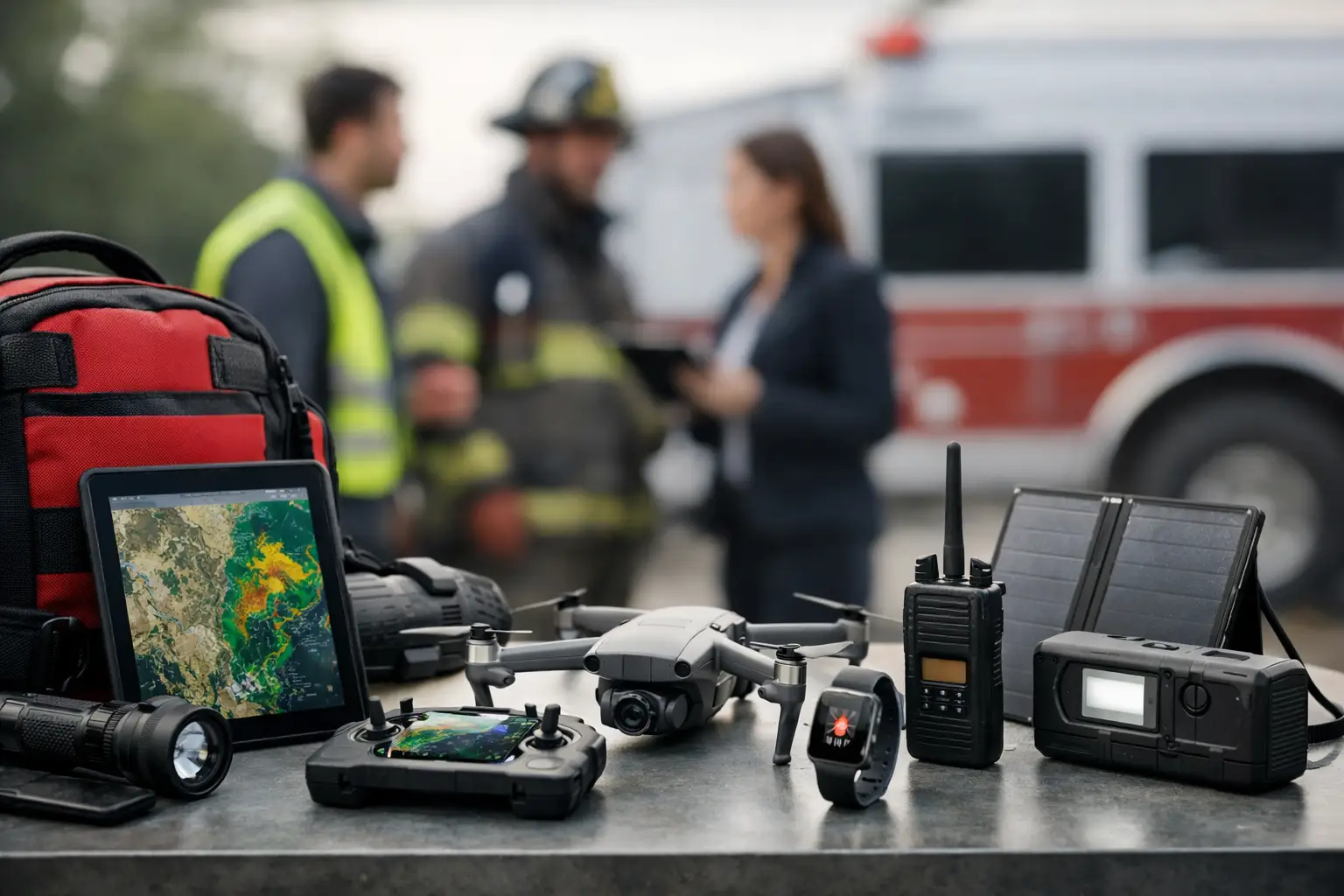
A critical incident rarely begins with a clean, verified alert. It may start with a concerning social media post, an employee report, severe weather approaching a facility, or fragmented calls from people who do not yet know what they are seeing. Emergency preparedness technology trends are increasingly focused on closing that gap between early signal and decisive action.
For security leaders, HR teams, executive protection professionals, and safety stakeholders, the question is no longer whether to adopt more technology. The operational question is whether the technology creates faster, clearer decisions when pressure is high. The strongest systems do not simply generate more notifications. They connect threat intelligence, location awareness, communications, documentation, and escalation workflows into a coordinated protective posture.
Emergency preparedness technology trends reshaping response
The market is moving away from isolated tools built for a single moment in a crisis. A mass notification platform, a camera system, a travel tracker, and a spreadsheet-based incident log can each provide value. But when those systems do not share context, teams lose time reconciling facts, assigning ownership, and documenting decisions.
The emerging model is centralized and intelligence-led. Technology is being evaluated not only for what it can detect, but for how effectively it supports prevention, verification, response, recovery, and post-incident learning.
AI is becoming a triage layer, not a replacement for judgment
Artificial intelligence is helping security operations process threat signals at a scale that manual teams cannot sustain. It can scan large volumes of public information, classify reports, identify emerging patterns, prioritize risk indicators, and surface relevant events based on geography, protected persons, facilities, or travel routes.
That capability has a real limitation: a model can identify a possible signal, but it cannot always determine intent, credibility, or operational relevance. A threatening phrase may be sarcasm. A report may be incomplete. A developing protest may pose little risk to one site and significant disruption to another.
This is why human-verified intelligence is becoming more valuable alongside AI. Analysts with investigation, threat assessment, and security experience can validate context, reduce false positives, and determine whether a signal warrants monitoring, escalation, or immediate action. The best technology shortens the path to informed judgment. It does not automate judgment out of the process.
Location intelligence is moving from maps to protective decisions
Location data has long been part of emergency operations, but its use is becoming more specific and more actionable. Organizations increasingly need to know which employees, executives, visitors, assets, or sites may be affected by a developing event – not just where the event occurred.
Modern location intelligence can connect an incident to defined geofences, travel itineraries, office footprints, and personnel locations. This allows security teams to identify exposure quickly and make targeted decisions: contact affected staff, adjust a route, activate a check-in, increase protective coverage, or restrict access to a facility.
Precision matters. Sending every alert to every employee creates alert fatigue and encourages people to ignore future instructions. Targeted alerts are more likely to be read, understood, and acted upon. They also give incident commanders a clearer picture of who may need assistance.
Mobile safety tools are becoming part of the response infrastructure
A mobile device is often the first available connection point during an emergency. For employees working alone, executives traveling internationally, students, families, or field teams, a mobile safety capability can provide direct access to SOS activation, emergency check-ins, location sharing, and verified threat alerts.
The trend is not simply adding a panic button to an app. Effective mobile preparedness tools need defined escalation paths. Who receives the SOS signal? Is location transmitted? Can the user upload photos, video, or notes? Can the organization coordinate a welfare check, security response, or law enforcement contact? Is there a record of each action taken?
These questions determine whether a mobile feature is a meaningful protective control or merely a notification mechanism. A practical program also accounts for real-world constraints, including dead zones, disabled permissions, battery loss, and employees who may be unable to speak during an incident.
Case management is becoming a preparedness requirement
Emergency response depends on facts that can be retrieved, shared, and defended. Yet many organizations still document incidents across email threads, personal notes, chat messages, and disconnected spreadsheets. That fragmentation creates risk long after the initial event has ended.
Centralized case management brings reports, witness information, evidence, communications, risk assessments, and response decisions into one controlled record. This is especially important for workplace violence concerns, harassment allegations, recurring facility incidents, executive protection matters, and any event that could lead to legal, regulatory, or employee relations scrutiny.
The value is not administrative convenience. A structured case record helps teams recognize repeat behaviors, preserve evidence, establish accountability, and support consistent decision-making. It also makes after-action reviews more useful because leaders can evaluate what happened against a complete timeline rather than recollections gathered weeks later.
Technology is shifting preparedness toward prevention
The most consequential change is the growing connection between emergency management and early intervention. Preparedness is no longer limited to evacuation plans, emergency supplies, and annual drills. Those controls remain necessary, but they address the moment after a threat has become visible.
Behavioral threat assessment platforms, confidential reporting channels, and analytics can help organizations identify concerning patterns before violence, disruption, or reputational harm escalates. For example, a single employee complaint may not meet an escalation threshold. Multiple reports involving fixation, threats, access concerns, or policy violations may reveal a pattern that requires a multidisciplinary review.
Technology can organize these indicators, apply defined assessment criteria, and route cases to the right stakeholders. It cannot decide whether a person presents a credible threat in isolation. That work requires trained professionals, documented governance, and careful attention to fairness, privacy, and due process.
Integrations are replacing the security tool pileup
Security teams are under pressure to work across physical security, HR, travel, legal, IT, operations, and executive leadership. A platform that cannot exchange data with existing systems often becomes another disconnected dashboard.
API integrations and centralized workflows are therefore becoming a major preparedness technology priority. Relevant information may need to move between access control systems, HR records, travel programs, mass communications, incident management tools, and intelligence feeds. When an incident occurs, teams should not have to re-enter names, copy screenshots, or manually build a distribution list before they can act.
Integration carries trade-offs. More connected systems can increase speed and visibility, but they also expand data governance requirements. Organizations need clear rules for access permissions, data retention, audit trails, vendor accountability, and the handling of sensitive personal information. Speed without control can create a different category of risk.
What leaders should evaluate before investing
A strong emergency preparedness technology program starts with operational requirements, not a feature checklist. Leadership should first identify the decisions that must be made in the first five minutes, the first hour, and the first day of a crisis. The platform should support those decisions with verified information, clear ownership, and reliable communication.
Four evaluation areas deserve particular attention:
- Signal quality: Can the system prioritize credible, relevant threats without overwhelming teams with noise?
- Human escalation: Is expert review available when context, credibility, or threat severity is unclear?
- Workflow control: Can teams assign actions, track status, preserve evidence, and document decisions in one place?
- Resilience: Does the process still function when communications are disrupted, personnel are unavailable, or an incident crosses multiple locations?
A product demonstration can make every capability appear immediate. A practical test is more revealing: run a realistic scenario involving a threatening message, a location-based alert, an executive in transit, or a weather-related facility closure. Measure how quickly the right people receive verified information, how clearly tasks are assigned, and whether the resulting record would stand up to executive or legal review.
The operational standard is coordinated protection
The future of emergency preparedness is not defined by a single algorithm, device, or alert channel. It is defined by coordinated protection: earlier detection, verified intelligence, precise escalation, documented action, and a repeatable process for learning from every event.
Risk Shield approaches this requirement by bringing intelligence, incident workflows, SOS capabilities, location-based visibility, and analyst-supported monitoring into a unified operating environment. For organizations responsible for people and operations, centralization is not a technology preference. It is a way to reduce delay when conditions change quickly.
Preparedness earns its value before the emergency is fully understood. Build the capability to see the signal, verify the risk, and put the right protective action in motion while there is still time to change the outcome.
