A threatening message sent at 11:47 p.m. A pattern of escalating complaints. An employee who has begun referencing a specific location, leader, or date. These are not isolated data points when viewed in context. Can AI detect workplace violence? It can help identify, organize, and escalate warning signals faster than manual processes alone. It cannot reliably predict violence or replace trained human judgment.
For security leaders, HR teams, and workplace safety professionals, that distinction matters. The objective is not to label people as dangerous. It is to recognize concerning behavior early, assess it through a disciplined process, and intervene before a situation becomes a crisis.
Can AI Detect Workplace Violence? What It Can and Cannot Do
AI can analyze large volumes of structured and unstructured information for patterns associated with potential threats. Depending on the authorized data sources and organizational policy, this may include incident reports, employee hotline submissions, case notes, security logs, threatening communications, publicly available risk indicators, and historical behavioral patterns.
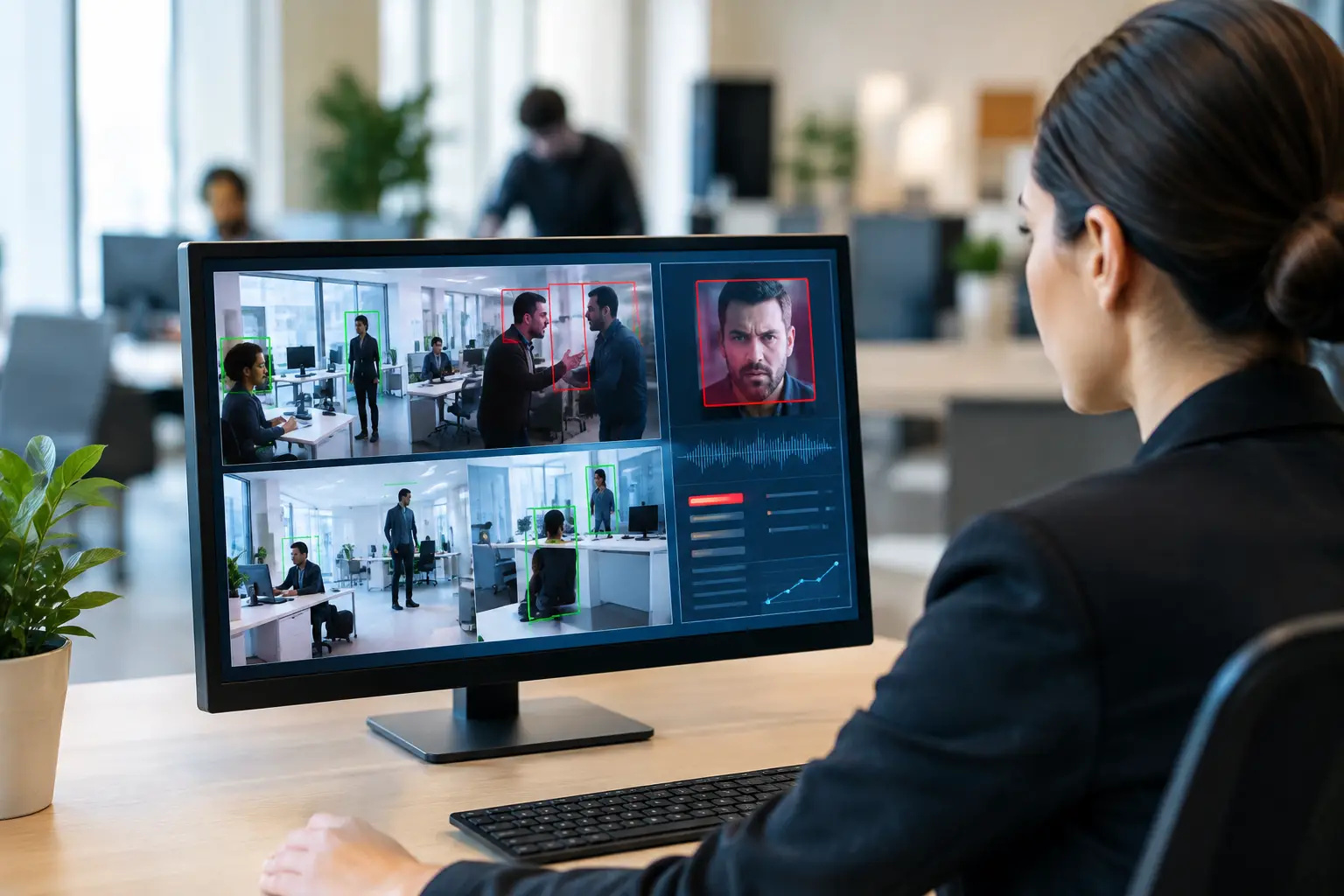
Its strength is speed and consistency. A well-configured system can surface repeated references to violence, identify connections across separate reports, flag language that warrants review, and prioritize cases that meet established escalation criteria. It can also reduce the chance that critical information remains buried in an inbox, disconnected spreadsheet, or separate departmental system.
But AI does not know intent with certainty. A phrase that appears alarming in isolation may be a joke, a quotation, a frustrated statement, or a legitimate report of someone else’s conduct. Context determines risk. An algorithm cannot interview a subject, assess credibility, understand workplace dynamics, or make the ethical and legal decisions required in a threat assessment.
The responsible answer is clear: AI should support detection and triage, while trained people make assessment and intervention decisions. That human layer should include appropriate security, HR, legal, employee relations, behavioral threat assessment, and law enforcement partners when circumstances require it.
The Warning Signals AI Can Help Surface
Workplace violence is rarely reducible to one keyword or one event. Research-informed threat assessment focuses on behaviors, communications, stressors, grievances, and escalation patterns rather than a simplistic profile of a “violent person.” AI is most useful when it helps teams connect those signals without treating any single one as proof.
For example, an incident management platform may recognize that several employees have independently reported intimidating conduct by the same individual. It may connect those reports to access-control anomalies, repeated policy violations, or a communication that identifies a target. It may also recognize urgency markers such as a stated date, a weapon reference, repeated surveillance of a location, or an explicit threat.
Common categories of signals that may warrant human review include:
- Direct, conditional, or implied threats toward a person, team, facility, or event
- Fixation on a grievance, perceived injustice, termination, discipline, or specific individual
- References to weapons, violent acts, target locations, schedules, or planned timing
- Escalating harassment, stalking, intimidation, or unwanted contact
- Sudden changes in behavior combined with credible reports of fear or concern
These indicators are not a checklist for automatic action. They are inputs to a case assessment. A report involving a specific threat and a near-term time frame requires a different response than a vague, one-time expression of frustration. AI can help distinguish urgency through configured rules and pattern analysis, but qualified reviewers must validate the finding and determine the next step.
The Operational Value Is Faster, Connected Response
Many organizations do not fail because they lack concern for employee safety. They fail because warning information is fragmented. HR may hold a complaint record. Corporate security may have a separate incident report. A manager may have received concerning messages. Legal may be aware of a separation issue. No one sees the full picture until after escalation.
AI-supported risk intelligence can bring those signals into a centralized workflow. Instead of asking teams to manually compare notes across systems, it can help correlate reports, preserve evidence, assign a severity level, notify the right stakeholders, and document decisions. This improves both response speed and accountability.
A practical workflow begins with clear intake channels. Employees need a trusted way to report concerns, whether through a hotline, mobile tool, manager escalation path, or security operations center. Reports should capture the basic facts: who is involved, what occurred, where and when it happened, whether there was a threat, and whether anyone is in immediate danger.
From there, AI can assist with categorization and prioritization. A human reviewer should validate the alert, check for related cases, and determine whether immediate protective action is needed. That may mean contacting emergency services, conducting a welfare check, adjusting access permissions, increasing security presence, arranging executive protection, or activating a behavioral threat assessment team.
Centralized documentation is not administrative overhead. It is a protective control. Accurate time-stamped records support continuity across shifts, help leaders understand why decisions were made, and preserve evidence if the matter becomes an employment, criminal, or civil investigation.
Human Verification Prevents Dangerous Errors
False positives can damage trust, invade privacy, and unfairly stigmatize employees. False negatives can leave a genuine threat unnoticed. Neither risk disappears because an organization deploys AI.
That is why governance must be designed before deployment. Organizations should define which data sources are appropriate, who can access risk information, how long records are retained, and what event types trigger review. They should also establish escalation thresholds that are proportionate to the concern. A low-confidence language flag should not produce the same response as a credible threat with a named target and a known location.
Human analysts and threat assessment professionals bring the judgment AI lacks. They can verify source credibility, evaluate the full context, identify protective factors, interview relevant parties, and separate a workplace conflict from an actionable threat. They can also recognize when a case involves mental health concerns, domestic violence spillover, stalking, insider risk, or a need for emergency intervention.
Risk Shield’s model of AI-driven monitoring with human-verified analysis reflects the operational standard organizations should expect: technology for continuous visibility, experienced review for informed decisions, and documented workflows for response.
Privacy, Bias, and Legal Boundaries Matter
A workplace violence detection program must protect people while respecting legal rights and organizational obligations. Monitoring practices should be transparent where required, tied to a legitimate safety purpose, and reviewed by counsel, HR, privacy, and labor stakeholders. Rules vary by state, workforce type, collective bargaining agreement, and data source.
Organizations should avoid systems that claim to infer dangerousness from personality, protected characteristics, appearance, disability, or vague emotional cues. Those approaches carry serious accuracy, discrimination, and privacy concerns. Focus instead on observable, reportable conduct and credible threat-related communications within authorized channels.
Bias testing also matters. Teams should regularly examine whether the system flags certain groups disproportionately, whether language models misread cultural expression or slang, and whether reviewers apply standards consistently. A defensible process includes audit trails, quality checks, appeal or correction paths where appropriate, and periodic review of outcomes.
Building a Defensible AI-Supported Program
The best workplace violence programs do not begin with a tool purchase. They begin with a defined operating model. Leadership should identify the team responsible for assessment, clarify decision authority, and establish a response protocol for urgent and non-urgent cases.
Training is equally important. Employees should know how to report concerns and what information is useful. Managers need to understand that they are not expected to diagnose risk, but they are expected to document and escalate credible concerns. Security teams need clear coordination protocols with HR, legal, facilities, executive protection, and local emergency responders.
Technology should then reinforce that operating model. Look for capabilities that centralize case management, preserve evidence, correlate reports, provide location-aware risk visibility, support configurable escalation, and deliver analytics that expose recurring issues or response gaps. The goal is not more alerts. The goal is better decisions under pressure.
When a concerning signal appears, time matters. Treat AI as an early-warning capability that helps the right people see the right information sooner. Pair it with trained assessment, clear authority, and rehearsed response actions. That is how organizations turn scattered warning signs into timely protection for the people who depend on them.
