A threat alert that arrives five minutes late is often no better than no alert at all. For security teams, executive protection professionals, HR leaders, and families responsible for personal safety, the real question is not whether an AI threat monitoring platform can collect more data. It is whether that platform can help people detect risk earlier, verify what matters, and act before exposure becomes an incident.
That distinction matters because most organizations are not struggling with a lack of information. They are struggling with signal overload, disconnected tools, and slow escalation. One system watches social chatter. Another tracks travel risk. Another stores incidents after the fact. By the time a team pieces those fragments together, the window for prevention may already be closing.
Why an AI threat monitoring platform matters
An effective AI threat monitoring platform is not just a feed of alerts with a machine learning label attached. Its job is to support decisions under pressure. That means recognizing patterns, filtering noise, applying location and context, and routing credible threats to the right people fast enough to make a difference.
For a corporate security team, that could mean identifying threatening language directed at an executive before a public appearance. For HR and workplace safety leaders, it could mean surfacing warning indicators tied to workplace violence concerns before behavior escalates. For a family office or high-net-worth individual, it could mean gaining time to reroute, shelter, or elevate protection based on emerging local conditions.
AI helps because modern threat environments move too quickly for manual monitoring alone. But AI by itself is not the answer. Security operations fail when automation pushes out unverified alerts, misses context, or overwhelms teams with low-value notifications. The platform has to be built for prevention, not just detection.
What separates a serious platform from a basic alerting tool
Many products claim to offer threat monitoring. Fewer deliver operational protection. The difference usually comes down to how the system handles context, verification, and action.
A basic alerting tool may scrape public data and send notifications based on keywords. That sounds useful until teams realize that common terms, sarcasm, reposts, and unrelated events can trigger constant false positives. Security personnel do not need more noise. They need a disciplined process for identifying what is credible, what is urgent, and what needs escalation.
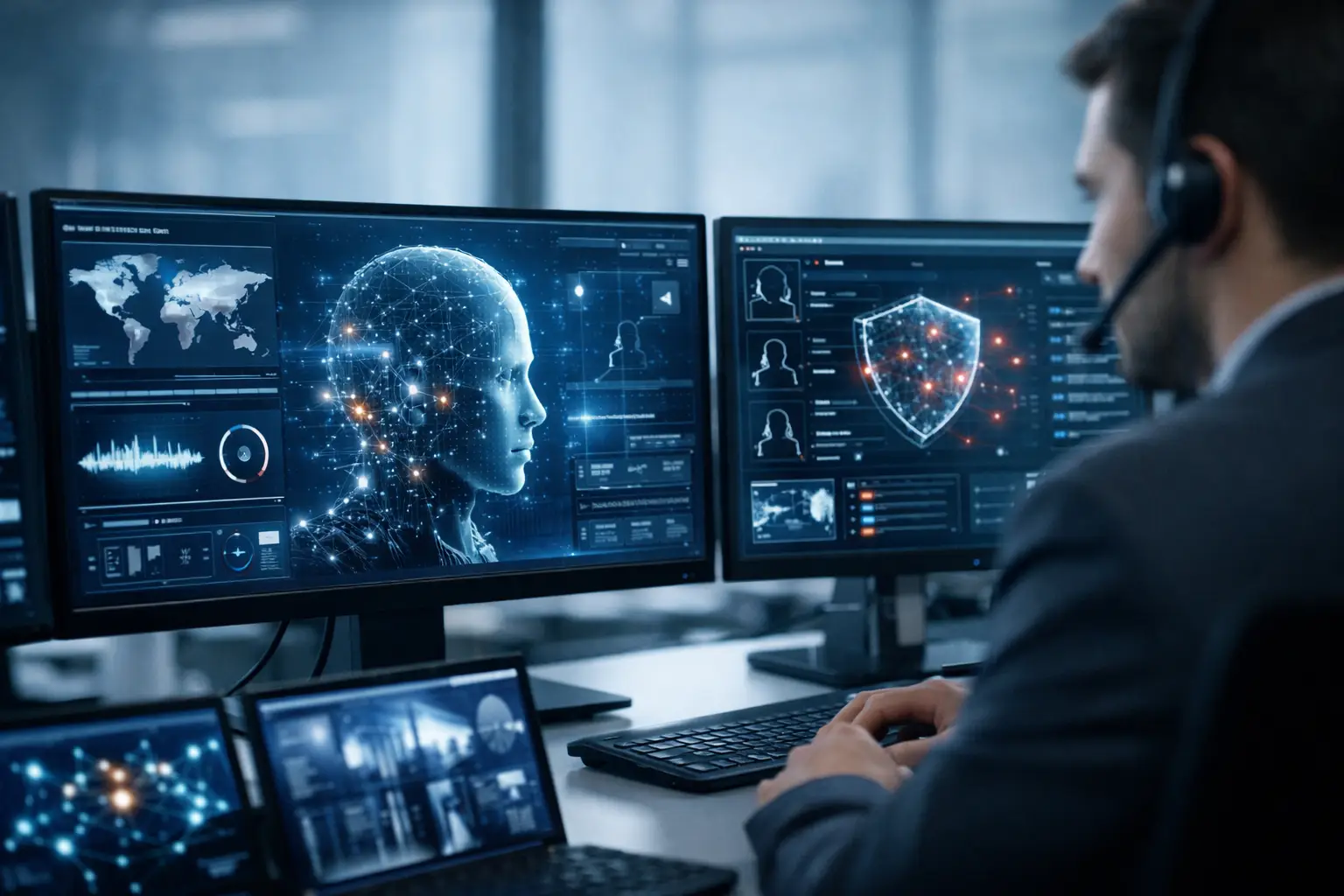
A serious AI threat monitoring platform should connect several layers. The first is broad collection across relevant sources. The second is AI-driven triage to detect anomalies, threats, and patterns at scale. The third is human review, because language, intent, and operational relevance often require trained judgment. The fourth is action, meaning the alert should flow into case management, response workflows, evidence capture, or protective measures without forcing teams to switch systems.
This is where many deployments fall short. They invest in detection but ignore workflow. If an alert cannot be documented, assigned, investigated, and tracked in one operational environment, valuable time gets lost in handoffs.
The role of human verification
In security operations, speed matters, but so does accuracy. Human verification is not a luxury layer for edge cases. In many environments, it is what turns AI from a technical feature into a defensible monitoring capability.
Threats rarely arrive in perfectly structured formats. A vague post, a sudden change in travel conditions, repeated references to a location, or a series of minor incidents may not look significant in isolation. A trained analyst can assess whether those fragments represent escalation, coincidence, or manipulation. That judgment reduces unnecessary disruption while helping teams move faster on real risk.
The trade-off is cost and complexity. Human-supported platforms typically require more operational depth than fully automated tools. But for organizations protecting executives, employees, students, facilities, or family members, that added layer often justifies itself through fewer false alarms and better decision quality.
Core capabilities to look for in an AI threat monitoring platform
The strongest platforms are built around operational outcomes, not feature theater. They help organizations prevent incidents, coordinate response, and maintain a record of what happened and why.
Real-time monitoring is table stakes, but it has to be relevant. A platform should support geographic filtering, asset-specific visibility, and tailored alerting thresholds based on the organization’s risk profile. A national retail footprint, a school campus, and an executive protection team do not need the same alert logic.
Threat detection should extend beyond obvious crisis events. It should identify indicators related to targeted harassment, workplace violence concerns, reputational threats, suspicious activity near sensitive sites, and emerging disruptions that could affect people or operations. The value is not just knowing that something happened nearby. The value is understanding whether it changes your risk posture.
Case management is equally important. Once a threat is identified, teams need a structured place to log evidence, assign ownership, document decisions, and preserve an investigation trail. Without that discipline, even good intelligence becomes hard to operationalize.
Response tools also matter. SOS functionality, mass communication support, executive protection workflows, and centralized incident documentation reduce friction when teams are under pressure. If users must jump between separate applications to alert, investigate, and respond, delays become almost inevitable.
Analytics often receive less attention during procurement, but they are critical over time. Trend detection can show repeated threats against a person, recurring incidents tied to a location, or gaps in response speed. That visibility supports staffing decisions, policy updates, and stronger prevention strategies.
Where AI helps most and where it needs limits
AI is strongest where scale and speed matter. It can process large volumes of signals, identify abnormal patterns, flag language associated with escalation, and prioritize review queues faster than any manual team. For organizations with distributed operations or high public exposure, this capability is essential.
Still, there are limits. AI models can miss sarcasm, coded language, and local context. They can overreact to high-volume noise around a public event. They can also inherit bias from training data or trigger concern where there is no credible threat. Security leaders should expect these constraints and ask how the platform manages them.
The best answer is not less AI. It is disciplined AI. That means transparent alert logic, configurable thresholds, analyst oversight, and a workflow that allows rapid correction when a signal is misclassified. Security teams should also ask whether the system improves over time based on feedback from actual investigations.
Buying for your environment, not the demo
An AI threat monitoring platform can look impressive in a product demonstration and still fail in live use. Buying decisions should focus on operational fit.
Start with scope. Are you protecting people, locations, executives, travelers, a school community, or a dispersed workforce? The answer shapes what data sources, escalation paths, and response tools matter most. A platform built mainly for public event monitoring may not serve workplace violence assessment well. A travel risk tool may not provide the documentation and investigative workflow needed by HR or corporate security.
Then evaluate integration. If your incident management process already depends on internal reporting systems, access control data, or mobile safety tools, the platform should fit into that ecosystem. Fragmentation is one of the main reasons threat intelligence goes underused.
Finally, test for operational discipline. Ask how alerts are validated. Ask what happens after detection. Ask whether the platform supports both prevention and response, or only one side of the equation. Risk Shield is built around that full operational chain, combining AI-driven monitoring with human-verified analysis and response-oriented workflows, because security teams need more than awareness. They need a system that helps them act.
The real standard for an AI threat monitoring platform
The standard is not whether the platform can generate alerts. Plenty of tools can do that. The standard is whether it improves protective decisions when time is limited and the cost of error is high.
A platform worth deploying should reduce uncertainty, not add to it. It should help teams identify credible threats earlier, document incidents cleanly, and coordinate response from one operational picture. It should also respect the reality that prevention is rarely about one dramatic warning. More often, it comes from recognizing small indicators early enough to intervene.
That is what security leaders should expect from modern threat monitoring. Not more dashboards. Not more noise. Better judgment, faster escalation, and a stronger position before the situation turns against you.
The right platform gives you time, structure, and verified intelligence. In protective operations, those three advantages can change the outcome.
