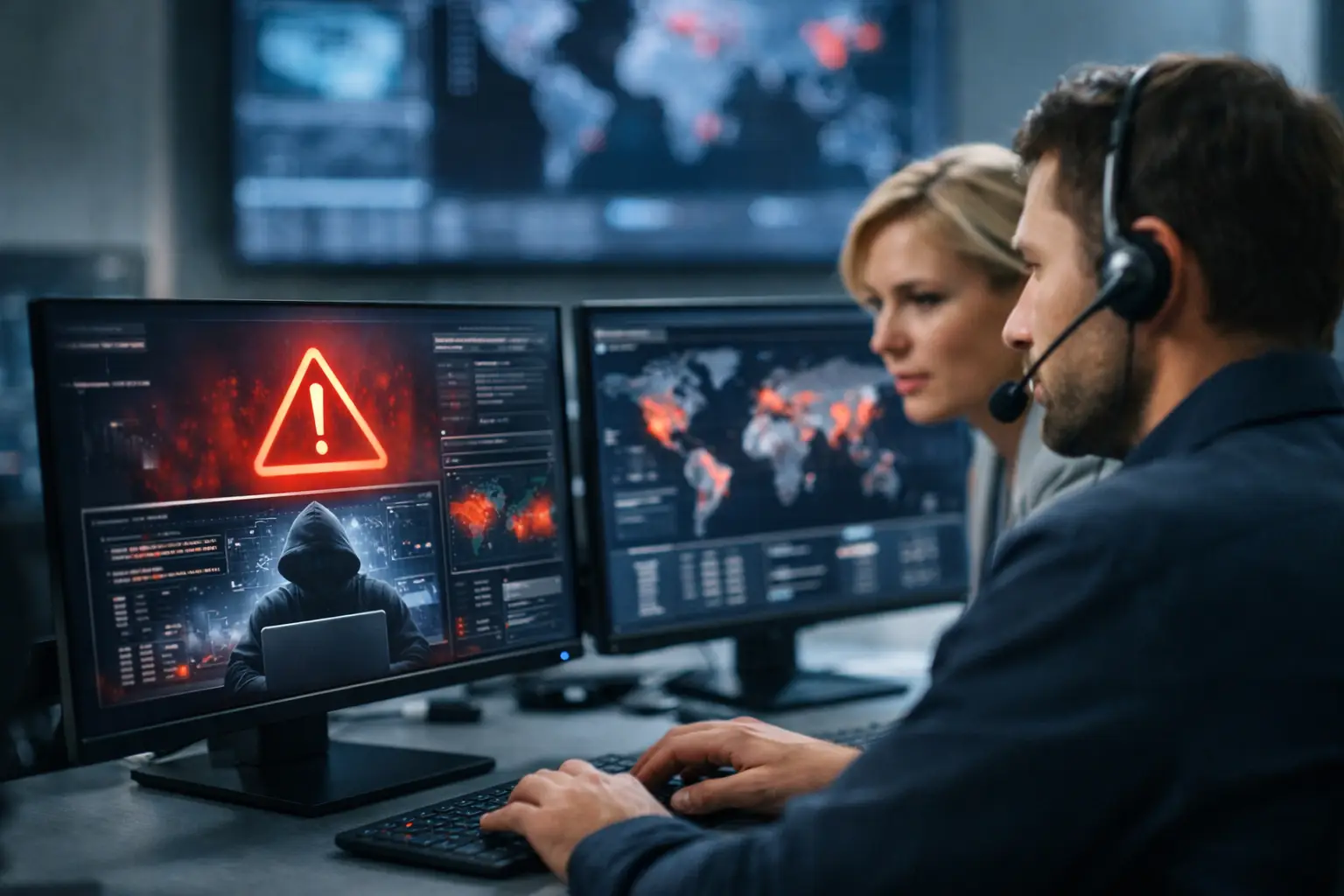
A security leader does not lose time because there are too few alerts. They lose time because too many signals arrive with no clear answer to the only question that matters: is this credible enough to act on now? That is where human verified threat alerts change the equation. They do not just push more information into a dashboard. They help organizations separate background noise from developing risk, so teams can escalate faster, document better, and protect people before a situation turns into an incident.
What human verified threat alerts actually mean
The phrase gets used loosely across the security market, so it is worth defining it clearly. Human verified threat alerts are alerts that have been reviewed, checked, and validated by trained analysts before or as they are delivered to the customer. That validation can include confirming source credibility, removing duplicate or misleading reports, adding context around proximity and relevance, and assessing whether the threat has operational impact.
This matters because raw alerting systems are built to detect signals, not necessarily to judge them with the discipline a security operation requires. An automated feed may identify a social media post, a local police event, a protest announcement, or a report of suspicious activity. But an experienced analyst can look at timing, location, intent, corroboration, and likely impact and determine whether the situation is informational, urgent, or not actionable at all.
For enterprise teams, that distinction affects staffing, communication, and liability. For executive protection teams, it affects movement decisions and route planning. For families and individuals, it affects whether they shelter, reroute, or call for support.
Why automation alone is not enough
AI-driven monitoring has real value. It can process large volumes of public data, identify patterns quickly, and flag anomalies at a speed no manual team can match. That speed is a major advantage when threats emerge fast.
But speed without judgment creates friction. If your team receives constant alerts that are technically accurate but operationally irrelevant, response quality drops. People start ignoring notifications. Decision-makers hesitate because they do not trust the signal. Escalation paths become inconsistent. The system is active, but the operation is less prepared.
Human verification addresses that gap. It puts trained assessment between detection and action. That does not mean every alert needs a slow manual review or that automation becomes secondary. It means the strongest model is hybrid. Machines widen visibility. Analysts narrow uncertainty.
There is also a practical truth security teams know well: context changes the meaning of a threat. A protest two miles away from one site may be routine. The same protest one block from an executive event venue may require immediate coordination. A vague online threat may be noise in one case and highly concerning in another if it references a named employee, school, office, or family member. Automation can flag both. Human analysts determine what the organization should do next.
The operational value of human verified threat alerts
The biggest benefit is not better data for its own sake. It is better decisions under pressure.
When alerts are verified by analysts, security teams gain a clearer basis for escalation. Instead of asking whether an alert is real, they can focus on response posture. That saves time across the chain of command. Corporate security can brief leadership with more confidence. HR and workplace safety teams can make faster protective decisions. Executive protection personnel can adjust coverage and movement with fewer assumptions.
Human verification also reduces false positives, which has a direct operational payoff. Every unnecessary escalation consumes time, disrupts business activity, and weakens trust in the system. Over time, false alarms train people to delay action. Verified alerting helps preserve alert discipline, which is critical in workplace violence prevention, travel security, and emergency response.
Another advantage is documentation quality. A verified alert is not just a warning. It can become part of a documented record that supports case management, incident review, and trend analysis. That is especially important for organizations managing repeated concerns such as stalking, harassment, targeted threats, or suspicious activity near facilities. A single alert may not justify a major intervention. A pattern of verified alerts often does.
Where human verified threat alerts make the biggest difference
Not every security environment needs the same level of monitoring, and not every alert has the same consequence. The value becomes most obvious when the cost of delay or error is high.
Workplace violence prevention
Threats in the workplace rarely appear as one clean, obvious signal. More often they build through fragmented indicators: online statements, concerning behavior, grievances, location references, and prior incidents. Human verified threat alerts help organizations avoid two failures at once – overreacting to every fragment and missing the pattern that warrants intervention.
For HR, legal, and security leaders, this means better-informed assessments and a more defensible response process. Verification adds discipline before internal action is taken.
Executive protection and travel security
Executive protection depends on timing and context. A report of unrest, a targeted threat, or suspicious activity near a hotel or meeting location may require immediate route changes, schedule adjustments, or added coverage. Automated alerts can surface the signal, but verified alerts tell the team whether the threat is credible, near-term, and relevant to the protectee.
This is where location-based intelligence becomes especially valuable. A broad alert with no proximity context is easy to dismiss. A verified alert tied to a route, venue, or destination is operational.
School, community, and family safety
Parents, schools, and community safety stakeholders face a different challenge. They often need clear, plain-language threat information without the resources of a large security department. Human verification helps convert scattered reporting into more trustworthy warning. That trust matters when protective action may involve a child, a household, or a community setting.
Enterprise incident management
For enterprise environments, verified alerts support more than detection. They improve coordination. When alerts feed into centralized workflows for case documentation, evidence upload, escalation, and analytics, teams can move from isolated awareness to controlled response. That is a major shift from reactive crisis handling to continuous protection.
What to look for in a human verified threat alerting capability
Not all verification models are equal. Some vendors use the term as light marketing language for basic moderation. Decision-makers should ask how verification actually works.
Start with analyst quality. Who is reviewing alerts, and what operational background do they bring? A meaningful verification layer should involve professionals with experience in investigations, threat assessment, law enforcement, intelligence, or protective operations. The point is not just to confirm that an event exists. The point is to judge relevance, urgency, and escalation need.
Then look at workflow speed. Human review should improve clarity without creating dangerous delay. If the process is too slow, the model fails in time-sensitive situations. The best systems combine automated detection with rapid analyst validation so the alert arrives fast and with context.
Context depth matters too. A useful alert should tell your team what happened, where it happened, how close it is to protected people or sites, whether the report is corroborated, and what level of attention it deserves. Without that, even verified alerts can still create guesswork.
Finally, consider what happens after the alert. Good threat monitoring should connect directly to operational tools such as escalation paths, SOS support, case management, incident reporting, and trend analysis. If alerting is disconnected from response, teams still end up stitching together critical decisions across separate systems.
A platform such as Risk Shield is built around that operational reality. The value is not just knowing that something happened. It is having verified intelligence flow into prevention, coordination, and response.
The trade-off leaders should understand
Human verification is not a magic filter that removes all uncertainty. Threat work rarely offers perfect clarity. Sometimes an alert is credible but incomplete. Sometimes a low-confidence signal becomes more serious over time. Sometimes the right move is increased monitoring rather than immediate escalation.
That is exactly why verification matters. It does not promise certainty where none exists. It improves judgment where consequences are real.
Organizations should also be realistic about scale. The more complex the operating environment, the more important it is to define thresholds, escalation rules, and protected assets clearly. Human verified threat alerts are strongest when paired with a documented response framework. The alert tells you what may require action. Your operating model determines who acts, how fast, and with what authority.
Security programs perform best when intelligence is credible, timely, and connected to execution. Human verified threat alerts deliver that middle layer between raw detection and real-world action. They give organizations a way to reduce noise without reducing awareness, to move faster without acting blindly, and to protect people with more discipline when the stakes are high.
The real test of any alert is simple: did it help your team make a better decision in time to matter?
