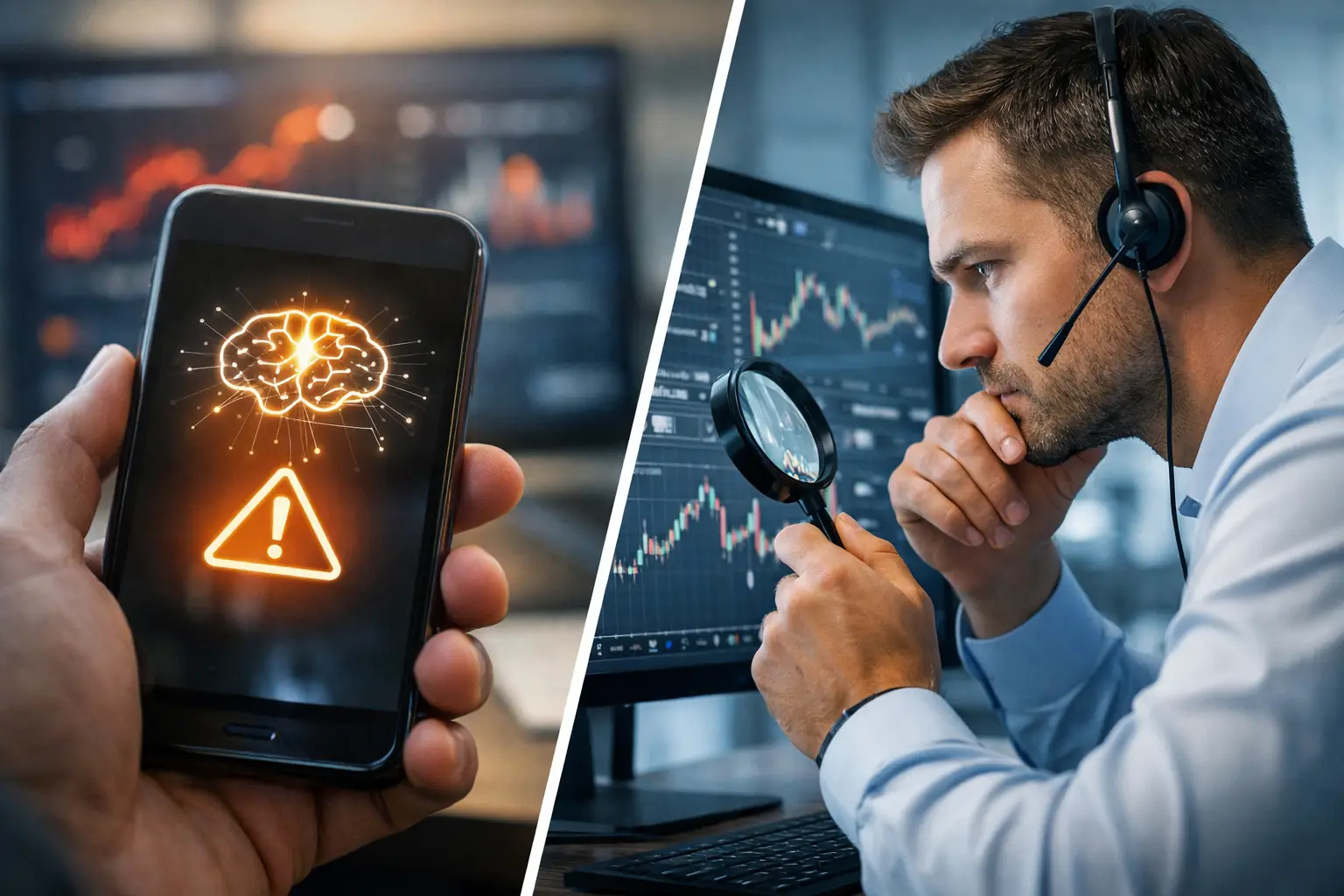
At 2:13 a.m., an alert that looks urgent can trigger a cascade of decisions – wake an executive protection team, lock down a site, notify HR, or escalate to law enforcement. The problem is not speed alone. In AI alerts vs analyst verification, the real question is whether the alert is accurate enough to act on without creating unnecessary disruption, cost, or exposure.
Security teams do not need more noise. They need credible intelligence they can trust under pressure. That is why the debate is not really machine versus human. It is about where automation is strong, where analyst review is indispensable, and how to build an operating model that supports both prevention and response.
What AI alerts do well
AI-driven monitoring is built for scale. It can ingest large volumes of public data, social signals, incident reports, location-based risk inputs, and behavioral indicators far faster than any manual team. That speed matters when a threat is emerging in real time and decision-makers need immediate visibility.
In practical terms, AI is effective at pattern recognition. It can flag unusual language, detect sudden spikes in activity around a person or facility, correlate multiple signals across sources, and surface issues that a human team might miss in the first pass. For organizations with multiple sites, traveling personnel, or distributed workforces, that kind of persistent monitoring closes a major visibility gap.
AI also brings consistency. A model does not get tired at the end of a shift or overlook a data point because three other incidents landed at once. It can apply the same logic continuously across thousands of inputs, which is valuable in high-volume environments where missing a weak signal can have serious consequences.
That said, consistency is not the same as judgment. AI can identify indicators. It cannot always determine what those indicators mean in operational context.
Where AI alerts fall short
Most security leaders have seen the downside of over-alerting. A keyword match, a geofence trigger, or a sudden burst of online chatter can produce a warning that appears serious but lacks context. If teams act on every machine-generated signal as if it were verified intelligence, alert fatigue sets in quickly.
The biggest issue is false positives, but that is not the only problem. AI can misread sarcasm, local slang, coded language, old information resurfacing as if it were new, or content that is technically relevant but operationally meaningless. It may detect a threat-adjacent pattern without understanding intent, capability, timing, or proximity.
That distinction matters. A post mentioning violence near a company office is not the same as a credible threat to employees. An angry message directed at a public figure is not automatically an executable attack plan. A traveler entering a higher-risk area does not always require escalation. Security operations depend on separating ambient risk from actionable threat.
Without that filter, automation can create friction instead of protection. Teams spend time chasing weak signals, leadership loses confidence in the system, and genuinely urgent warnings compete with background noise.
Why analyst verification changes the quality of response
Analyst verification adds what algorithms often lack: context, judgment, and escalation discipline. A trained analyst does more than confirm that an alert exists. They assess source credibility, compare current reporting against known baselines, identify corroborating information, and determine whether the signal justifies action.
This is where experienced threat analysts, investigators, and protective intelligence professionals make a measurable difference. They can evaluate language nuance, behavioral indicators, geographic relevance, motive, and feasibility. They can also distinguish between a reputational issue, a personal grievance, a generalized threat, and a developing incident that requires immediate intervention.
That process reduces false alarms, but it also improves response quality. A verified alert can include operational guidance: who is affected, what changed, how urgent it is, what action threshold has been met, and whether the issue should be documented, monitored, escalated, or handed off to response teams.
For executive protection, workplace safety, and duty of care programs, this matters more than raw speed alone. A fast alert with low confidence may force unnecessary movement, expose principals to avoidable disruption, or consume response resources. A slightly slower but verified alert often supports better decision-making and stronger outcomes.
AI alerts vs analyst verification in real operations
The cleanest way to understand AI alerts vs analyst verification is to look at how security programs actually operate. Few mature teams rely on one without the other.
If your organization monitors threats across multiple locations, executives, travelers, and digital channels, AI is the only practical way to maintain broad situational awareness at scale. It serves as the detection layer. It identifies anomalies, prioritizes signals, and keeps watch continuously.
Analyst verification acts as the decision layer. It validates what matters, removes noise, and converts machine detection into operational intelligence. That is the point where an alert becomes something a security director, HR leader, school administrator, or family office can act on with confidence.
The trade-off is straightforward. AI-only models are faster and cheaper on the surface, but they can produce more noise and require internal teams to do the hard work of validation themselves. Human-only models offer stronger judgment, but they cannot match machine speed and coverage without significant staffing costs. The hybrid model exists because the threat environment demands both reach and accuracy.
When automation is enough and when it is not
Not every alert needs analyst review. If a system is identifying weather disruptions, general crime trends, or low-risk location advisories, automated alerts may be sufficient for awareness. In those cases, the consequence of a false positive is usually manageable.
The threshold changes when the stakes rise. Potential workplace violence indicators, threats toward executives, targeted harassment, suspicious pre-incident behavior, travel risk near critical assets, and events that may trigger emergency response should not rely on automation alone. The cost of getting context wrong is too high.
This is where organizations need clear escalation rules. If an alert could affect life safety, business continuity, employee wellbeing, or legal exposure, analyst verification should be part of the workflow. If the signal is informational and low consequence, automated delivery may be appropriate.
A strong security program does not ask whether humans or AI are better in the abstract. It defines what level of confidence is required before each type of action is taken.
Building a hybrid model that works
The most effective programs treat AI and analysts as complementary controls, not competing options. AI should monitor broadly, score signals, and surface anomalies quickly. Analysts should review higher-risk events, add context, and drive escalation based on established playbooks.
That only works if the workflow is disciplined. Alert thresholds must be tuned. Case management has to capture evidence and decisions. Location, personnel, and incident data need to be centralized so analysts are not working in fragments. And response teams need a clear path from detection to notification to action.
This is where platform design matters. If your monitoring system, incident records, communications, and escalation processes sit in separate tools, the value of both AI and human review drops. Security teams lose time moving between systems instead of assessing risk. A unified operating picture improves both speed and accountability.
Risk Shield’s model reflects this reality: AI-driven monitoring supported by human-verified analysis, incident workflows, and centralized visibility. That combination is not a marketing preference. It is an operational requirement for organizations that need real-time alerts they can act on.
The decision is not speed versus people
Security leaders are under pressure to move faster, document better, and justify every escalation. That pressure can make fully automated alerting look attractive. But when threats involve employees, executives, students, travelers, or family members, the better question is not how quickly an alert arrives. It is whether the alert is credible, relevant, and actionable.
AI expands visibility. Analyst verification protects decision quality. Together, they create a more disciplined response posture – one that catches early indicators without overwhelming teams with noise.
If your current alerting environment produces more questions than clarity, that is not a signal to choose one side of the equation. It is a sign that your operation needs better alignment between machine detection and human judgment. In security, confidence is not built by receiving more alerts. It is built by knowing which ones deserve action.
