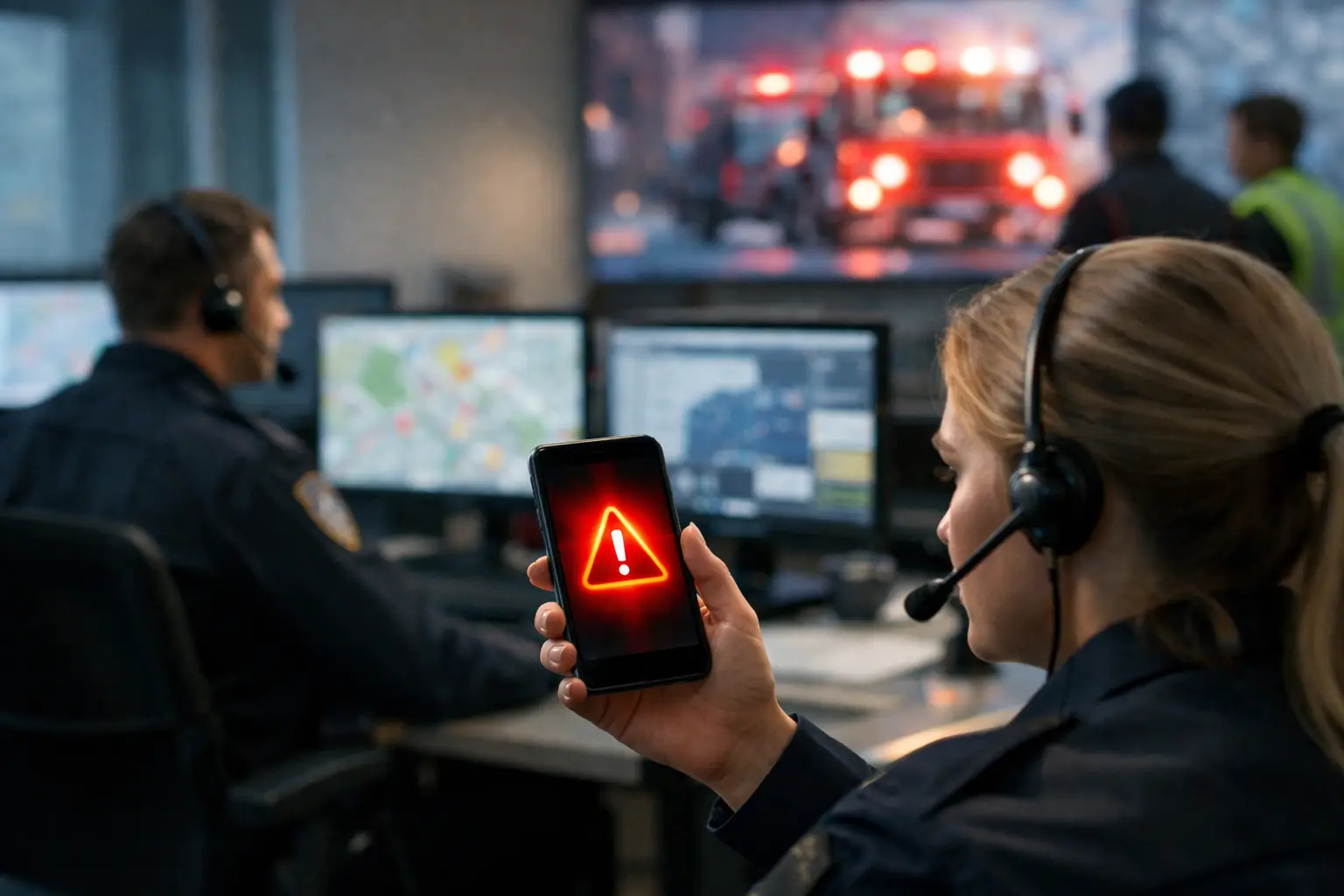
An alert goes out at 2:13 p.m. A manager sees it immediately. A second employee assumes someone else is handling it. A third never hears the tone because notifications were silenced. By 2:19, six minutes are gone, and in an active security event, six minutes is operationally significant. That is the real issue behind how to improve emergency alert response – not just sending alerts faster, but making sure the right people receive them, trust them, and act without hesitation.
For most organizations, alert failure is rarely caused by one broken tool. It comes from fragmented systems, unclear ownership, weak escalation paths, and too much noise before a real incident ever happens. If you want a faster response, you need more than messaging. You need an alerting process tied to decision-making, verification, and field execution.
How to improve emergency alert response starts before the alert
A slow response usually begins long before an emergency. Teams often focus on the notification itself, but response speed is set upstream by planning, role clarity, and signal quality. If your alert system can push a message in seconds but your team still spends ten minutes confirming whether the threat is credible, the delay is operational, not technical.
Start with trigger criteria. Many organizations send alerts based on loosely defined thresholds, which creates inconsistency. One site leader escalates a parking lot disturbance immediately, while another waits for confirmation from multiple sources. That gap creates avoidable risk. Define what events trigger an advisory, what triggers an emergency alert, and who has the authority to initiate each level.
Verification also matters. False alarms erode trust fast. When employees receive too many low-value notifications, response behavior degrades. People stop reading carefully. They delay action. They assume the alert is precautionary rather than urgent. The goal is not to send more alerts. It is to send fewer, better alerts backed by enough intelligence to prompt action.
Build an alert system around action, not awareness
Awareness alone does not protect people. A useful emergency alert tells recipients what happened, what it means for them, and what to do next. That sounds obvious, but many alerts still fail on all three points.
A message that says “Security incident reported at headquarters” creates uncertainty. Employees do not know whether to shelter in place, avoid the lobby, lock office doors, or evacuate. A stronger alert is specific and directive: where the incident is, which population is affected, what immediate action is required, and when the next update will come.
This is where message structure becomes critical. Good alerts are short, plain, and operational. They avoid jargon, speculation, and overloaded detail. In high-stress situations, people do not process long explanations well. They need direct instruction they can act on in seconds.
The same principle applies across channels. Text, app push, email, voice call, desktop banner, and mass notification each have strengths, but channel volume is not the same as communication quality. Redundancy helps, but only if the message remains consistent. If one platform says to evacuate and another says to await instructions, confusion spreads faster than the incident itself.
Response improves when ownership is unmistakable
One of the fastest ways to lose time during an emergency is to let responsibility remain implied instead of assigned. Security thinks HR will communicate with staff. HR assumes corporate communications is drafting the message. Site leaders wait for executive approval. Meanwhile, no one owns the next move.
If you are serious about how to improve emergency alert response, assign roles in advance and document them clearly. Who validates the incident? Who authorizes the alert? Who monitors acknowledgments? Who escalates to law enforcement, executive protection, or medical support? Who tracks employee status? These decisions should not be made in the middle of a fast-moving event.
This is especially important for organizations operating across multiple locations. Centralized oversight is valuable, but local context still matters. A corporate security team may control the alert platform, while regional leaders execute protective actions on site. That model works only when authority lines are defined before a crisis.
There is also a trade-off here. Fully centralized alerting creates consistency, but it can slow site-level response if local teams must wait for approval. Fully decentralized alerting increases speed, but may create uneven standards and more false positives. Most mature programs need a tiered model: local authority for immediate life safety issues, central oversight for broad communication, documentation, and escalation.
Better intelligence reduces hesitation
People respond faster when they believe the alert is credible. That credibility comes from context. Was the threat observed directly, reported by a trusted source, detected through monitoring, or verified by an analyst? The more confidence decision-makers have in the signal, the less time they waste debating whether to act.
This is one reason generic mass notification tools often fall short in higher-risk environments. They distribute messages, but they do not always help organizations understand whether the threat is real, expanding, localized, or connected to prior incidents. Better alert response depends on better intelligence inputs.
Location data, prior case history, suspicious activity patterns, and human review can all improve signal quality. For example, an alert tied to a verified workplace violence concern should not be handled the same way as an unconfirmed disturbance in a public area. Both matter, but they require different protective actions and different urgency.
A unified system is valuable here because fragmented data creates delay. If incident reports live in one platform, employee contact data in another, and threat intelligence in a third, responders waste time switching systems when they should be making decisions. Bringing monitoring, alerting, escalation, and case management into one operational workflow reduces friction when seconds matter.
Training is the difference between delivery and response
Many organizations can prove an alert was sent. Far fewer can prove people responded correctly. That gap matters.
Emergency alert response is a behavioral issue as much as a technology issue. Employees need to know what different alert types mean, how to acknowledge them, what actions are expected, and when to escalate information back to security. If your workforce receives an emergency notification only during a real event, you are relying on improvisation under stress.
Training should be short, repeated, and tied to actual scenarios. A headquarters office, a school campus, a mobile workforce, and an executive protection team do not face the same threat picture, so they should not receive the same blanket instruction. Tailor drills to environment and role.
Leaders also need separate training. Frontline personnel need simple action steps. Managers need decision authority, accountability, and communication discipline. Security teams need practice handling incomplete information without freezing the process. The best programs rehearse the messy middle, where facts are partial and time pressure is high.
Testing should go beyond whether the alert was delivered. Measure acknowledgment times, response actions, escalation speed, and after-action gaps. If one business unit consistently lags, that is not just a training issue. It may signal weak leadership alignment, poor device coverage, or message fatigue.
How to improve emergency alert response with smarter escalation
Not every alert should trigger the same response tree. Over-escalation burns resources and reduces urgency over time. Under-escalation creates exposure when early warning signs are missed. The answer is a structured escalation model that matches threat type, confidence level, geography, and potential impact.
A weather disruption affecting one office should not activate the same workflow as a targeted threat against an executive, a workplace violence warning, or a school perimeter breach. Each incident type needs prebuilt pathways for notification, verification, external coordination, and internal reporting.
This is where automation helps, but only if it is disciplined. Automated routing can notify the right stakeholders faster, launch check-in requests, trigger SOS monitoring, and create a record for later review. But automation should support judgment, not replace it. High-consequence events still require human validation and command oversight.
Organizations with stronger response capability often use a hybrid model: automated alert distribution paired with analyst review or security command support. That combination reduces lag while protecting against blind escalation. It is also more sustainable for lean security teams that cannot monitor every input manually around the clock.
Measure what happens after the tone sounds
If you cannot measure response, you cannot improve it. Most teams track send rates and delivery rates because those are easy. The more meaningful metrics come after the alert is received.
Look at time to acknowledgment, time to protective action, time to escalation, and time to incident closure. Review who did not respond, which locations showed delay, and which alert types caused confusion. Study repeat failures. If shelter-in-place alerts are acknowledged quickly but evacuation alerts are not, that points to a training or instruction gap, not a technology problem.
After-action reviews should also examine message quality. Did recipients understand what was happening? Did they know whether the threat applied to them? Did the next update arrive when promised? Trust is built through consistency. If alerts are vague, delayed, or contradictory, response confidence drops during the next event.
For organizations with elevated duty-of-care obligations, documentation is not optional. A defensible record of alerts, acknowledgments, escalations, and evidence can support internal review, legal scrutiny, and long-term risk reduction. It also helps identify patterns before they become major incidents.
The strongest emergency alert programs are not built around a single notification tool. They are built around verified intelligence, clear authority, structured escalation, and repeatable action under pressure. That is how alerting becomes protection instead of noise.
If your current process depends on people figuring things out in the moment, the system is already too late. Build for credibility, speed, and control before the next alert demands it.
