
At 2:13 a.m., a security leader does not need more alerts. They need the right alert, verified fast enough to decide whether to escalate, shelter, dispatch, or stand down. That is where analyst verified threat feeds separate themselves from automated signal collection. The issue is not whether data exists. It does. The issue is whether that data has been reviewed, filtered, and framed in a way that supports action.
For organizations responsible for people, facilities, executives, and operations, raw threat data can create as many problems as it solves. A high-volume feed may surface social chatter, crime reports, severe weather, protest activity, or suspicious online behavior, but volume alone does not improve protection. If every signal looks urgent, teams either waste time chasing noise or miss the event that actually matters.
What analyst verified threat feeds actually do
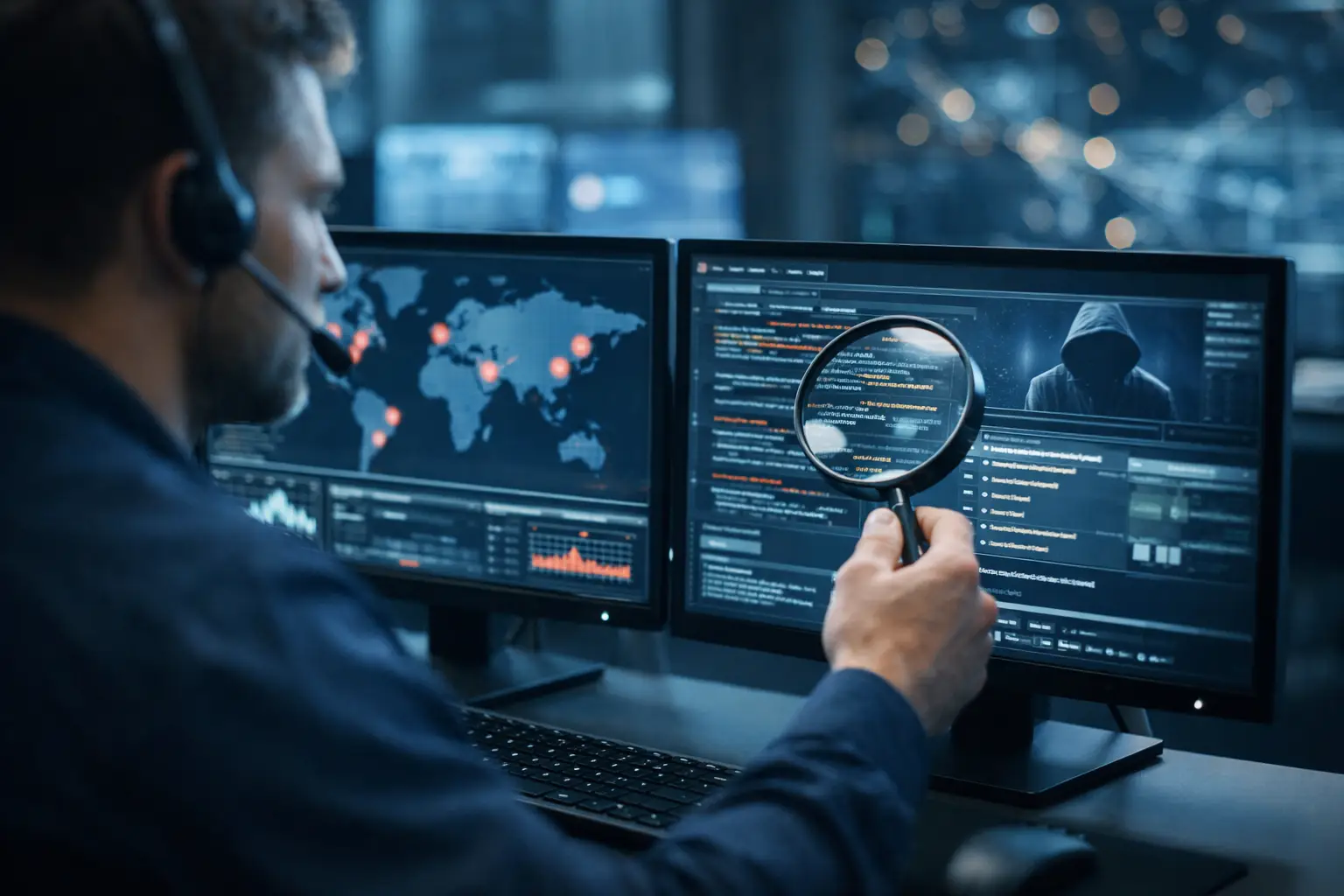
Analyst verified threat feeds combine machine speed with human judgment. Automated systems ingest large amounts of data from public, proprietary, and location-based sources. Analysts then review those signals, assess credibility, remove obvious noise, and add context that software alone often misses.
That context matters because risk rarely arrives in a neat format. A post about a planned disruption near a facility might be sarcasm, rumor, recycled media, or a credible precursor to real-world activity. An analyst can compare the source, timing, geography, related incidents, and behavioral indicators before the alert reaches the client. That does not make the feed infallible. It makes it usable.
In practice, verified feeds help answer the questions operators ask under pressure: Is this credible? Does it affect our people or assets? How quickly do we need to act? Who should be notified? Those are operational questions, not data science questions.
Why automated feeds alone often break down
Fully automated threat feeds promise scale, and scale is useful. But automation has blind spots. It is excellent at collecting, tagging, and correlating signals. It is less reliable when meaning depends on intent, local nuance, contradictory reporting, or fast-moving developments.
The most common failure point is false positives. A keyword match can trigger an alert that looks serious until a human reviews the source and sees it has no protective value. Another problem is duplicated urgency. Multiple sources may report the same incident with slight variations, giving the impression of multiple threats when there is only one.
There is also the issue of prioritization. A school security team, corporate risk manager, and executive protection detail do not need the same threshold for escalation. A generic feed cannot always distinguish between what is interesting and what is actionable for a specific environment.
This is why security teams that operate in real conditions usually prefer a hybrid model. AI can process at scale. Analysts can apply discipline. Together, they produce a feed that supports decisions rather than distracting from them.
The operational value of analyst verified threat feeds
The strongest case for analyst verified threat feeds is not technical elegance. It is decision quality. When teams receive fewer but better alerts, they can move faster and with more confidence.
That shows up in several ways. First, response times improve because teams spend less time validating the alert itself. If analyst review has already assessed source credibility and relevance, the receiving team can focus on protective action.
Second, escalation becomes more consistent. Verified feeds can support structured workflows by distinguishing between events that require monitoring, internal notification, executive awareness, or immediate field response. That consistency matters during off-hours, cross-functional incidents, and high-stress events.
Third, incident documentation gets cleaner. When alerts arrive with basic validation and context, case records are easier to organize, defend, and review later. For organizations concerned with workplace violence prevention, executive protection, employee safety, or duty of care, that paper trail has real value.
Fourth, trust improves. Security teams stop ignoring alerts when the alerts repeatedly prove relevant. That may sound basic, but alert fatigue is one of the quiet failures in modern threat monitoring. Once confidence drops, even a good system can lose operational value.
Where human verification matters most
Not every threat category needs the same level of analyst involvement. Severe weather alerts, for example, can often be automated effectively because the underlying source data is structured and authoritative. Human review still helps with impact assessment, but the signal itself is usually straightforward.
The need for verification increases when the source landscape is messy or adversarial. Threats involving workplace violence indicators, targeted hostility, protest activity near sensitive sites, executive travel risk, stalking behavior, reputational threats with physical security implications, and emerging local disruptions often require judgment.
That judgment includes more than checking if a source is real. Analysts assess whether an event is developing, whether it is geographically relevant, whether it shows signs of escalation, and whether it should trigger protective measures now or continued monitoring. In higher-risk environments, that distinction can prevent both overreaction and dangerous delay.
What to look for in analyst verified threat feeds
Not all verified feeds are equally useful. Some providers add minimal review to largely automated alerts and call it analyst verification. Others build a true operational layer around the intelligence.
The first thing to assess is verification methodology. Ask how analysts evaluate credibility, what sources they review, how they handle conflicting reports, and what criteria trigger escalation. If the process is vague, the output usually is too.
Next, look at relevance controls. The best feeds are not just verified. They are tailored by geography, asset type, executive itinerary, workforce footprint, or threat category. A well-run system should help your team see what affects your environment, not everything happening everywhere.
Speed also matters, but speed without discipline is just faster noise. Ask how the provider balances rapid alerting with analyst review. In some situations, a preliminary alert followed by verified updates makes sense. In others, waiting for quick validation before notifying the client produces a better operational outcome.
Finally, examine integration with response workflows. Threat intelligence becomes far more valuable when it connects to incident management, escalation paths, documentation, and communications. A verified feed should not end at the alert. It should support what happens next.
The trade-off: volume versus confidence
There is no perfect feed. More verification can mean slightly slower alert delivery. More automation can mean more noise. The right model depends on your risk profile, staffing, and tolerance for false positives.
A global enterprise with a mature intelligence team may want broader raw collection with internal analysts doing the final review. A lean corporate security function, family office, school, or regional employer may need a provider that delivers more finished intelligence from the start. Neither approach is universally right.
What matters is understanding the cost of bad alerts. If your team loses hours to chasing low-value notifications, the system is draining resources. If your personnel hesitate because they do not trust the alert, the system is weakening response. In both cases, confidence is not a soft benefit. It is an operational requirement.
Analyst verified threat feeds in a unified protection strategy
Threat intelligence has the most impact when it is connected to action. A verified alert about a hostile individual, local disruption, or emerging incident is far more useful when it can trigger the next step inside the same operating environment.
That may include notifying stakeholders, documenting the case, attaching supporting evidence, checking location exposure, activating an emergency workflow, or escalating to specialized support. This is where platforms built for protection operations have an advantage over stand-alone alerting tools.
Risk Shield reflects this hybrid model well by pairing AI-driven monitoring with human analyst review and response-oriented workflows. That combination is increasingly important because most organizations do not fail from lack of data. They fail when data, decision-making, and execution remain disconnected.
Why this matters to leadership, not just security teams
Verified intelligence is often treated as a technical buying decision. It is not. It affects leadership visibility, duty of care, business continuity, and legal defensibility.
When HR is managing a concerning employee issue, when a protection team is monitoring executive travel, or when operations leaders need to decide whether to change site posture, the quality of incoming intelligence shapes the quality of the response. Poorly filtered feeds create confusion across departments. Verified feeds support shared understanding.
That is especially important in moments where minutes matter and certainty is incomplete. Leaders rarely get perfect information. What they need is credible information they can defend.
The best threat feeds do not simply tell you that something happened. They help you decide what it means for your people, your operations, and your next move. That is the difference between monitoring risk and being prepared for it.
