A security program is only as fast as its ability to move verified information to the right people. The top emergency communication systems do more than send mass notifications. They help security, HR, leadership, executive protection teams, and employees recognize a threat, make a decision, escalate response, account for people, and preserve a defensible record of what happened.
That distinction matters when an incident evolves by the minute. A weather alert may require a shelter-in-place order. A workplace violence concern may require discreet escalation to security and law enforcement. A threat near an executive’s travel route may call for a route change before the individual arrives. The strongest systems support those different operating realities without creating more noise, confusion, or disconnected data.
What Makes an Emergency Communication System Effective?
Emergency communication is not a single channel. It is an operating capability that combines alerting, intelligence, response workflows, and accountability. A system that can deliver a text message in seconds is useful, but delivery alone does not confirm that recipients understood the instruction, reached safety, or received follow-up guidance.
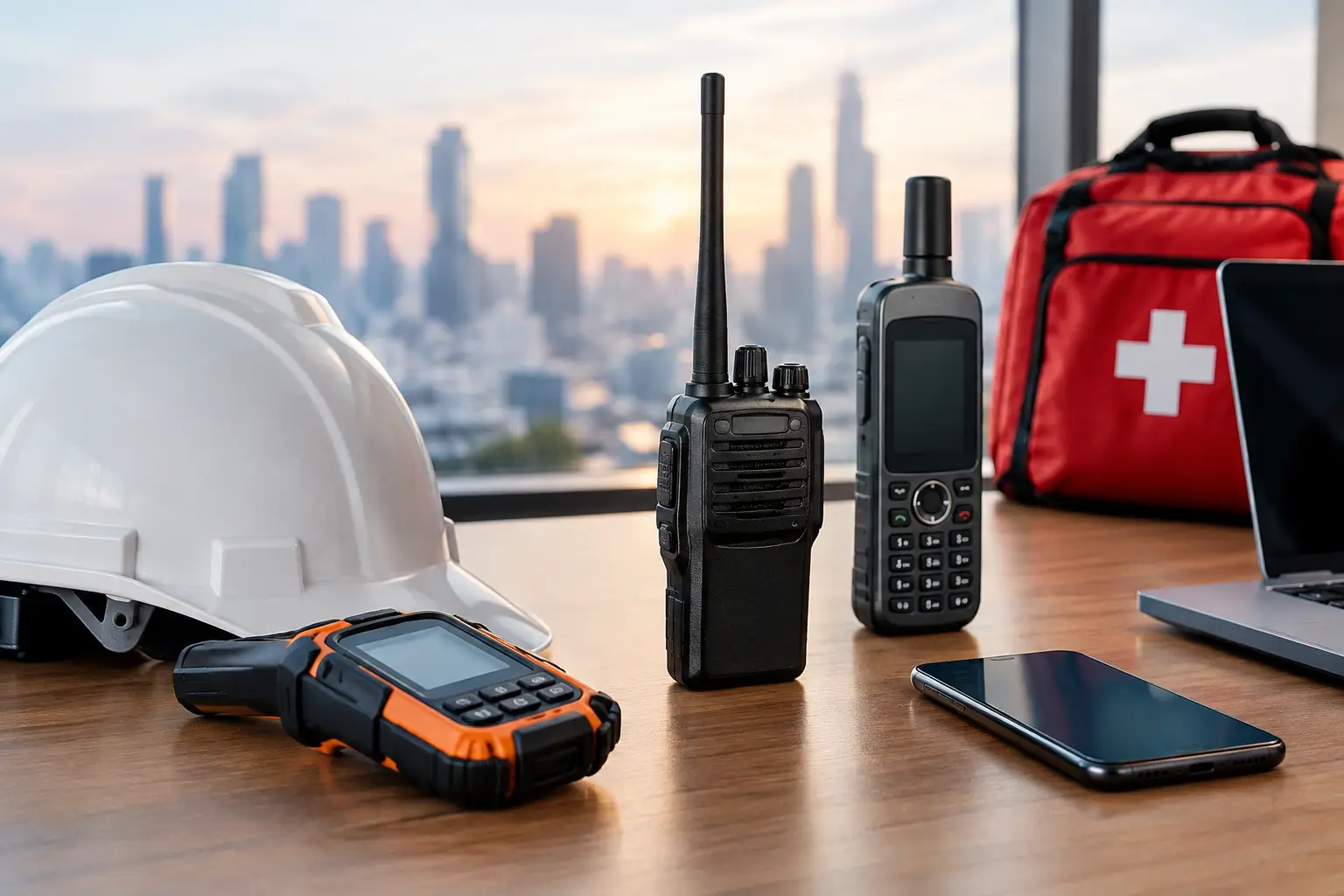
For enterprise teams, the standard should be higher. Effective platforms provide multi-channel delivery across SMS, voice, email, mobile push notifications, desktop alerts, and collaboration tools. They allow operators to segment audiences by location, role, building, travel status, or risk profile. They document acknowledgments and response actions so leadership can see where assistance is needed.
The trade-off is complexity. More channels and automations can improve coverage, but only if the organization maintains clean employee data, prebuilt templates, current distribution groups, and clear authority to send alerts. A system is not operationally ready because it was purchased. It is ready when people can use it under pressure.
The Top Emergency Communication Systems by Use Case
There is no universal winner. The right platform depends on whether your highest-risk scenario is severe weather, workplace violence, business continuity, executive travel, a school safety event, or a dispersed workforce. The categories below clarify what leading systems are designed to do.
Mass Notification Platforms
Mass notification platforms are built for rapid, high-volume communication. They are often the core of an enterprise emergency communications program because they can reach thousands of people across several channels at once.
These systems are well suited to facility closures, severe weather, utility outages, active threats, and large-scale operational disruptions. Their strengths are speed, reach, message templates, geofenced notifications, polling, and delivery reporting. The best platforms also support two-way communication, allowing recipients to confirm they are safe, request help, or report conditions on the ground.
Their limitation is context. A mass notification system can tell people what to do, but it may not explain whether a specific threat is credible, who needs protection first, or how an incident connects to prior concerns. Teams often need an intelligence and case-management layer around mass alerting to make informed decisions rather than simply distribute alerts.
Critical Event Management Systems
Critical event management systems are designed for organizations that need to coordinate complex, multi-stage incidents. They bring together incident plans, task assignments, stakeholder communications, resource tracking, and executive reporting.
This category fits large employers, healthcare systems, financial institutions, universities, logistics operations, and multinational organizations with established business continuity or crisis management functions. During a major event, operators can activate playbooks, assign actions to defined teams, track completion, and maintain a common operating picture.
The advantage is coordination. The challenge is implementation discipline. These systems work best when an organization has mature response plans and regularly exercises them. If a team has not defined decision rights, escalation thresholds, or recovery procedures, sophisticated workflow software cannot supply those fundamentals on its own.
Personal Safety and SOS Applications
Personal safety applications extend emergency communications to the individual. They are particularly valuable for lone workers, traveling employees, field teams, executives, students, and family members who may need immediate support outside a corporate facility.
A capable app can provide an SOS function, location sharing, emergency check-ins, panic activation, and direct access to security or response support. For executive protection teams, location-aware tools can improve coordination by helping operators understand where a protectee is, whether they have checked in, and what local risks may affect movement.
The critical question is what happens after an SOS is activated. Some applications only alert designated contacts. Others connect the user to trained monitoring personnel, capture incident details, and create an escalation path to security leadership or emergency services. The difference can determine whether the tool functions as a convenience feature or a true protection capability.
Threat Intelligence and Risk Monitoring Platforms
Threat intelligence platforms address the gap between alerting and prevention. They monitor developing risks such as civil unrest, severe weather, crime patterns, public safety events, targeted threats, and conditions affecting personnel or facilities.
For security leaders, this category is essential because emergency communication should begin before the emergency reaches the front door. Location-based intelligence can identify a threat near an office, event venue, executive residence, or travel destination. Human verification is especially valuable when public reporting is incomplete, misleading, or too broad to support an operational decision.
Risk Shield brings this intelligence-led approach together with alerting, SOS capabilities, incident documentation, and case workflows. The model is designed for teams that need more than a broadcast tool: they need verified visibility, structured escalation, and a record that supports both response and prevention.
Incident Management and Case Documentation Systems
Incident management systems focus on what happens after a report is received. They centralize evidence, witness accounts, photos, videos, tasks, communication logs, and status updates in a controlled case record.
This is particularly important for workplace violence concerns, harassment reports, suspicious activity, threats against leadership, and repeat safety issues. A notification may initiate the response, but the case record helps teams identify patterns, assign follow-up actions, preserve evidence, and demonstrate that concerns were assessed appropriately.
Organizations should avoid treating incident documentation as an administrative afterthought. Inconsistent records create blind spots. They also make it harder to recognize escalation indicators across separate reports, departments, or locations.
How to Evaluate Emergency Communication Systems
Start with the incidents your organization is most likely to face and the people you are responsible for protecting. A headquarters-focused system may be insufficient for a workforce that travels, works alone, or operates across multiple sites. A travel risk tool may not address a workplace violence report that requires HR, legal, security, and leadership coordination.
Evaluate systems against five operational questions:
- Can the platform reach the right people through more than one channel, even when a network or device fails?
- Can operators target alerts by real-time location, facility, team, role, or exposure level?
- Does it support two-way status reporting, SOS activation, and accountability rather than one-way broadcasting alone?
- Can the organization verify threats, manage false reports, and document decisions before and after an event?
- Does it integrate with existing identity, HR, security, travel, access control, and case-management systems?
Also examine the human component. Automated alerts are fast, but automation can amplify inaccurate or irrelevant information. Systems backed by trained analysts, established escalation protocols, and clear response ownership are better positioned to reduce false positives without delaying critical action.
Build a Layered Communication Strategy
The most resilient approach combines several capabilities instead of asking one tool to solve every problem. Mass notification provides speed. Threat intelligence provides early warning and context. SOS tools protect people in the field. Incident management preserves the facts and drives follow-up. Critical event workflows coordinate the wider response.
That does not mean every organization needs five separate platforms. Fragmentation is a real operational risk. Security teams should prioritize a connected system that can share location, incident, communication, and response data across the people responsible for action.
Before selecting technology, test your current process with a realistic scenario. Consider a credible threat near a facility, an employee who cannot be reached, a senior leader traveling through the affected area, and conflicting information on social media. If your team cannot quickly determine who is exposed, who owns the decision, what message to send, and where the record lives, the gap is not only technological. It is operational.
The right emergency communication system gives your team a disciplined way to act before uncertainty becomes crisis. That is the standard worth building toward.
