A threatening message posted at 2:13 a.m. may look insignificant in isolation. Paired with prior harassment reports, a public reference to a workplace location, and unusual online activity, it can become an actionable warning. Can AI detect safety threats at that stage? In many cases, yes. But detection is only the first operational step. The real test is whether an organization can verify the signal, assess the risk, and move the right people into action before harm occurs.
For corporate security leaders, HR teams, executive protection professionals, and families responsible for personal safety, AI is not a replacement for judgment. It is a force multiplier for situational awareness. It can process a volume of digital, location-based, and incident data that no human team could continuously review on its own. Used with disciplined workflows and qualified human oversight, it gives protection teams more time to prevent escalation.
Can AI Detect Safety Threats in Real Time?
AI can identify patterns, language, behaviors, and changes in conditions that may indicate a developing safety or security concern. Depending on the system and data sources, it may monitor public online content, internal reports, incident histories, weather events, civil unrest, travel disruptions, facility activity, and location-specific risk indicators.
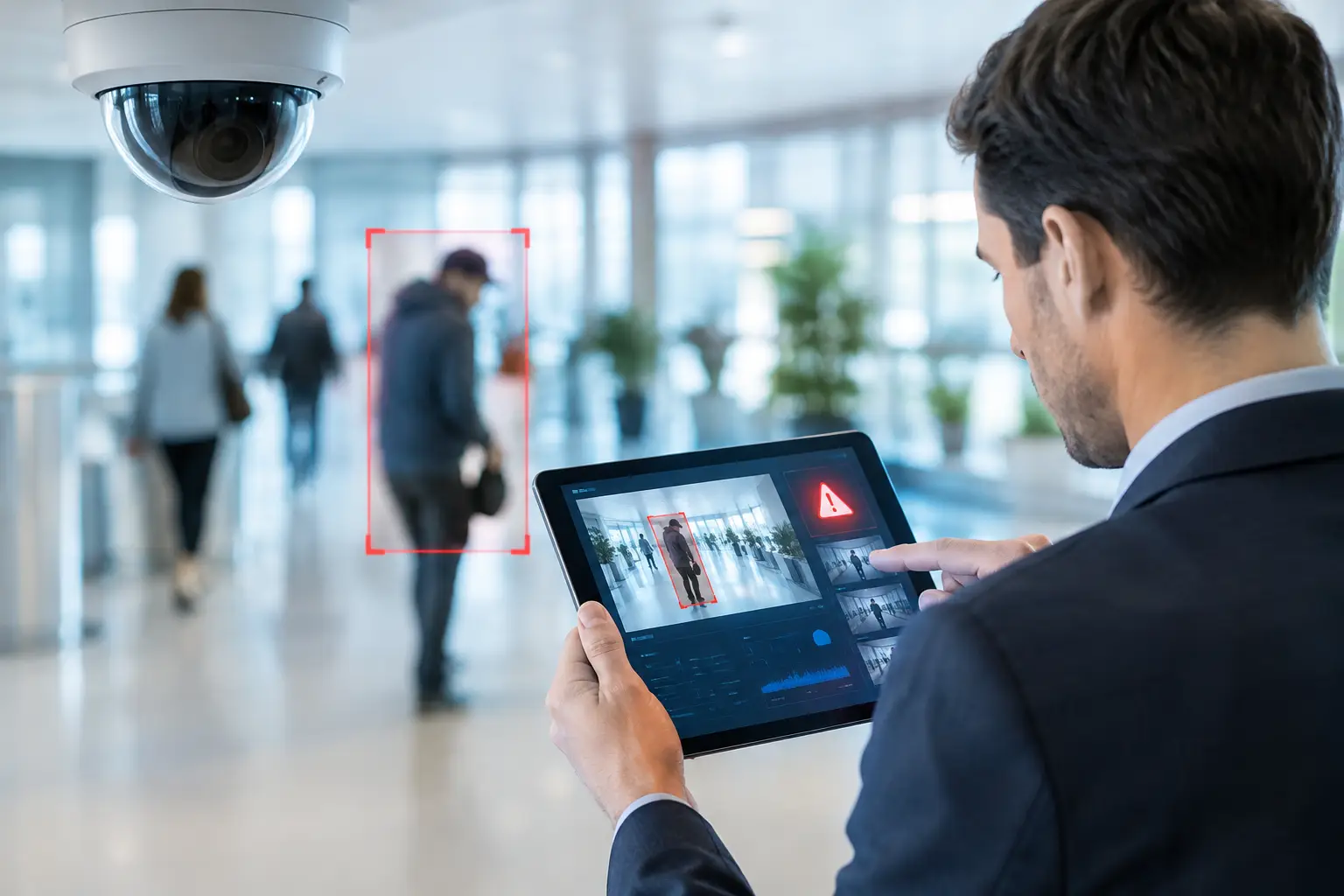
The technology does not “know” intent in the way a trained investigator does. It recognizes signals associated with known risk patterns. Natural language processing can identify threatening language, fixation, grievance, references to weapons, targeted locations, or calls for violence. Image and video analysis may flag visible weapons, suspicious objects, crowd surges, or unauthorized access. Geographic analysis can reveal when an incident, alert, or environmental hazard is relevant to a protected person, office, school, event, or travel route.
Speed is the immediate advantage. A threat monitoring team may need to review thousands of posts, reports, alerts, and data points across a day. AI can prioritize the small subset that warrants attention in seconds. That capability is especially valuable outside business hours, during large-scale events, or when a security team is managing multiple locations.
Real-time detection, however, should never be confused with real-time certainty. An alert is an intelligence lead, not a final finding. The strongest operations use AI to identify and organize risk signals, then apply human verification and established escalation protocols.
What AI Detects Well
AI performs best where there is sufficient data, recognizable patterns, and a clear definition of what requires attention. It can help teams surface emerging risks that might otherwise remain fragmented across systems or go unnoticed until after an incident.
Threatening Language and Escalation Signals
Machine learning models can flag direct threats, hostile language, stalking indicators, identity-based harassment, and repeated references to a specific individual or location. They can also detect less explicit signals, such as escalating grievance language, fixation on a public figure or executive, or posts that suggest planning rather than impulsive frustration.
Context matters. A statement that appears threatening may be a song lyric, a news quote, or a sarcastic comment. Conversely, a seemingly vague message may become more concerning when connected to prior incidents, access to a location, or known behavioral changes. This is why analyst review is not optional for meaningful threat decisions.
Location-Based Risk Changes
A general news alert about a protest, wildfire, active police operation, or severe weather event is rarely useful on its own. The question is whether it affects a person, facility, route, or event under your protection.
AI can correlate risk events with designated locations and travel patterns, helping teams identify exposure quickly. An executive protection detail can receive notice that a demonstration is forming near a hotel. A corporate security team can see that a transit disruption may affect employee departures. A family can recognize that a developing emergency is close to a loved one’s location. The value comes from relevance, not alert volume.
Incident Patterns Across Time
Single reports can be misleading. Repeated reports often tell a different story. AI-supported analytics can identify recurring harassment, unusual visitor activity, repeat locations, common subjects, and rising incident frequency. It can help security and HR teams see patterns across cases that are otherwise trapped in emails, spreadsheets, access logs, and separate reporting tools.
This supports earlier intervention. A series of low-level conduct concerns may not meet the threshold for an emergency response, but the accumulated pattern may justify a workplace violence assessment, welfare check, access-control review, or protective planning.
Where AI Can Fall Short
Security leaders should be skeptical of any platform that promises perfect prediction. Human behavior is complex, data is incomplete, and some threats leave few detectable signals before an event. AI can reduce blind spots, but it cannot eliminate uncertainty.
False positives are a practical concern. If a system sends too many low-value alerts, teams begin to ignore it. This alert fatigue can be as dangerous as having no monitoring at all. False negatives also matter: a threat may use coded language, occur in private channels, or never appear in available data.
Bias requires active control. Models trained on uneven or poorly labeled data can over-flag certain communities, language styles, or forms of expression. A responsible threat intelligence operation sets clear criteria, audits outcomes, limits collection to appropriate sources, and ensures that a trained human reviews sensitive findings before action is taken.
Privacy and legal boundaries must also shape the program. Organizations should define what data they collect, why they collect it, who may access it, how long it is retained, and what escalation is permitted. Monitoring should support safety, not create uncontrolled surveillance. Clear governance protects employees, customers, executives, and the organization itself.
Human Verification Turns Detection Into Protection
The difference between an alerting tool and a protection capability is what happens after a signal appears. AI can sort, score, and prioritize. Experienced analysts and security professionals determine credibility, intent, capability, imminence, and recommended action.
A disciplined review process asks direct questions. Is the subject identifiable? Is there a target? Does the individual have access, proximity, a history of violence, or signs of planning? Has the language escalated? Are there corroborating reports or physical-security concerns? What protective action is proportionate to the risk?
That assessment may result in no action beyond documentation and continued monitoring. It may also warrant notification to a security leader, coordination with HR, an executive protection adjustment, law enforcement engagement, a welfare check, or activation of an emergency response plan. The point is not to treat every alert as a crisis. The point is to make decisions with evidence and speed.
Risk Shield’s model combines AI-driven monitoring with human-verified analyst support because both capabilities are necessary. Automation provides scale and persistence. Skilled review provides context, accountability, and operational judgment.
Building an AI Threat Detection Program That Works
Start with the risks that matter most to your organization or household. A corporate campus may prioritize workplace violence indicators, facility disruptions, and employee travel exposure. An executive protection program may focus on public threats, event locations, and route-specific intelligence. A school or community program may emphasize concerning behavior reports, emergency coordination, and documented intervention pathways.
Next, establish a clear escalation structure. Every meaningful alert should have an owner, a response timeframe, defined decision authority, and a place for evidence. Centralized case management matters because security decisions are rarely made from one data point. Teams need a reliable record of what was detected, who reviewed it, what actions were taken, and why.
Technology should also connect to operations. An alert that cannot reach the right person, trigger an SOS workflow, document evidence, or support coordinated communications has limited protective value. Integrations with incident management, access control, HR processes, emergency communications, and analytics help remove the gaps that appear when systems operate in isolation.
Finally, measure the program by operational outcomes rather than the number of alerts generated. Useful measures include analyst review time, false-positive rates, time from detection to escalation, repeat incident trends, case resolution, and adherence to response procedures. More alerts do not mean more safety. Better decisions, made earlier, do.
The Practical Standard for AI Safety Detection
AI is most effective when it is treated as an early-warning capability within a larger protection system. It can identify weak signals, connect fragmented information, and keep watch when human attention is limited. It cannot independently determine intent, replace a threat assessment professional, or make ethical and legal decisions about intervention.
The right question is not whether AI can predict every dangerous act. It cannot. Ask whether your current operation can detect credible warning signs, verify them quickly, document the evidence, and act with discipline when risk rises. If the answer is uncertain, the next protective improvement is not more noise. It is better intelligence, clearer ownership, and a response plan people can execute under pressure.
