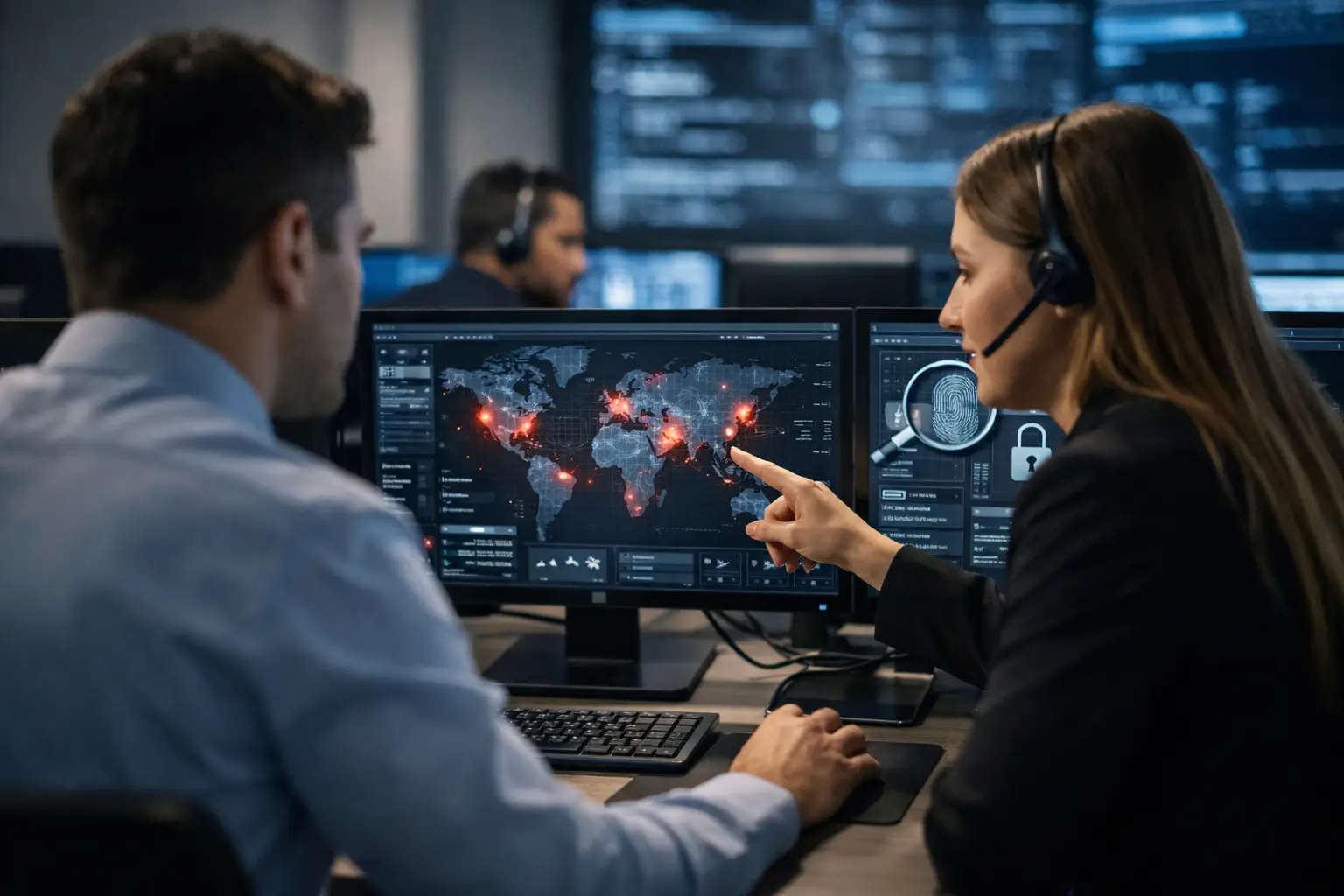
A security team can receive hundreds of alerts and still miss the event that puts an employee, executive, facility, or community at risk. The problem is not always a lack of data. It is a lack of context, ownership, and a defined path from signal to action. Learning how to build threat visibility means creating an operating picture that shows what matters, where it matters, who may be affected, and what your organization will do next.
Threat visibility is not a dashboard project. It is a protection capability. When built correctly, it gives decision-makers enough verified intelligence to prevent avoidable harm, direct resources quickly, and document decisions under pressure.
What Threat Visibility Actually Means
Threat visibility is the ability to detect, assess, prioritize, and track risks across the people, locations, assets, and operations your organization is responsible for protecting. It combines external signals, internal reports, location intelligence, and historical incidents into one usable view.
A flood of raw alerts is not visibility. Neither is a weekly report that arrives after a disruptive event has passed. Visibility exists when a security leader can answer four operational questions quickly: What is happening? Who or what is exposed? How credible is the threat? What action is required now?
The answer will look different by organization. A corporate security team may focus on civil unrest near offices, threats targeting senior leaders, and employee travel exposure. HR and workplace safety teams may need earlier warning of concerning behavior, threats, or escalating interpersonal conflict. An executive protection team may need real-time route, venue, and residential-area intelligence. The common requirement is a trusted, prioritized picture of risk.
Start With the Decisions You Need to Make
Many threat monitoring programs fail because they begin with tools instead of decisions. Before selecting feeds, configuring alerts, or building a command center, identify the decisions your team must make during normal operations and during an incident.
For example, determine who has authority to adjust travel, increase site security, initiate a welfare check, notify leadership, activate an emergency response plan, or involve law enforcement. Then identify the information each decision requires. A vague alert about a protest has limited value. A verified assessment that identifies the protest location, expected timing, likely disruption, proximity to your office, and recommended protective posture supports action.
Set thresholds that reflect your actual risk tolerance. Not every hostile social media post warrants the same response. Not every severe weather alert requires a site closure. Your thresholds should account for credibility, intent, capability, proximity, target relevance, and the vulnerability of potentially affected people or locations.
This work creates discipline. It also reduces a common failure mode: escalating every signal until personnel become desensitized and begin ignoring the system.
Build a Clear Threat Coverage Model
Threat visibility becomes manageable when coverage is organized around what you protect. Map your exposure in practical categories: people, places, events, travel, digital channels, and critical operations. For each category, define the threats that could cause harm or disruption.
A distributed employer may monitor workplace violence indicators, severe weather, active violence, civil disorder, infrastructure failures, and threats to facilities. A family office may add executive harassment, doxxing, kidnap risk, reputational targeting, and travel-related threats. Schools and community organizations may prioritize threats of violence, suspicious activity, emergency communications, and safeguarding concerns.
This is not a request to monitor everything. Broad collection without a defined coverage model creates noise and increases analyst workload. Focus first on the threats with the greatest potential impact and the shortest window for intervention.
Map Risk to Specific Locations and People
Location is often the missing layer in threat intelligence. A regional event may be irrelevant until it occurs within a few blocks of a facility, a travel route, a residence, or a scheduled event. Conversely, a lower-profile incident can become urgent when it directly affects a vulnerable employee or principal.
Maintain current records for sites, offices, residences, event venues, travel itineraries, and other protected locations. Assign location owners and keep contact details current. Pair this data with employee travel information and executive movement protocols where appropriate and authorized.
Privacy matters here. Collect and retain only what is necessary for a legitimate safety purpose, apply access controls, and establish clear governance for sensitive personnel information. Visibility without responsible data handling creates a different category of risk.
Combine Technology With Human Verification
Automated monitoring is essential for scale. It can scan news, public safety sources, social media, weather feeds, and other channels far faster than a human team. It can also correlate signals with geofenced locations, watchlists, and historical patterns.
But automation alone cannot reliably distinguish a credible threat from rumor, satire, recycled content, or an event that has already been resolved. It may also struggle with ambiguity, local context, and the operational significance of a threat to your organization.
Use technology to detect and organize signals. Use trained analysts to validate material threats, assess credibility, identify exposure, and provide clear escalation guidance. This hybrid model is especially valuable when a decision carries legal, reputational, or life-safety consequences.
Risk Shield applies this approach by combining AI-driven monitoring with human-verified analyst support, helping teams receive intelligence that is more than a stream of unfiltered notifications.
Establish One Intake and Case Management Process
External intelligence is only half the picture. Some of the most important warning signs originate inside the organization: a concerning message reported to HR, an employee safety concern, a suspicious person at a facility, an SOS activation, or evidence submitted after an incident.
These reports need a central intake process. If information is scattered across email, text messages, spreadsheets, separate HR systems, and security logs, patterns remain hidden and response teams lose time reconstructing events.
A strong process gives every report a case record with a time stamp, source, people and locations involved, evidence, assigned owner, risk assessment, actions taken, and closure rationale. It should support attachments such as screenshots, photos, call notes, and video where policy permits.
Centralization improves more than documentation. It allows teams to identify repeat locations, recurring subjects, escalating behavior, and gaps in protective controls. It also provides a defensible record of how the organization assessed and managed a threat.
Define Escalation Before the Alert Arrives
A threat alert without an escalation path simply transfers uncertainty to the recipient. Build clear, role-based workflows before an incident occurs.
For lower-level events, the response may be monitoring, an internal advisory, or a check with a site contact. For credible and immediate threats, the workflow may require security operations, HR, executive protection, legal counsel, emergency management, and local law enforcement to receive targeted notifications at the same time.
The key is specificity. Define who owns assessment, who authorizes protective actions, how employees are notified, when leadership is briefed, and when the incident is closed. Set response-time expectations for different threat tiers. A high-priority alert that sits unacknowledged for an hour is not an effective control.
Test the workflow with realistic scenarios. A tabletop exercise involving a threat near headquarters will reveal different gaps than one involving a traveling executive, an employee reporting an imminent concern, or a severe weather event that affects multiple sites. Revise playbooks based on what the exercise exposes.
Measure Whether Visibility Is Improving Protection
Threat visibility should produce measurable operational improvement. Track whether teams are identifying relevant threats earlier, reducing false positives, acknowledging alerts faster, and closing cases with complete documentation.
Useful measures include time from detection to assessment, time from assessment to notification, percentage of alerts confirmed as relevant, overdue cases, repeat incidents by location, and the number of preventive actions taken before disruption occurs. For executive protection and travel programs, evaluate whether intelligence changed routes, schedules, accommodations, or protective posture when it mattered.
Metrics require interpretation. More reported incidents may indicate worsening conditions, but they may also show that employees trust the reporting process. A lower alert volume may reflect improved filtering, or it may mean important sources have been lost. Review metrics alongside analyst findings and operational outcomes.
Keep the Picture Current
Threat environments change. Facilities open and close, executives travel, employee populations shift, and local conditions evolve. A coverage model built once and never reviewed will gradually lose relevance.
Review priority threats, monitored locations, contact rosters, escalation rules, and protective plans on a regular schedule. Review them immediately after major incidents, organizational changes, or a close call. The goal is not to build a perfect prediction engine. It is to ensure your people can recognize meaningful risk early enough to make a controlled decision.
The strongest security programs do not wait for certainty when people may be exposed. They build the visibility, judgment, and response discipline to act when the first credible signs appear.
