A threat alert is only valuable if the right person can act on it before exposure becomes harm. Security leaders do not need another stream of headlines, social posts, or generic risk scores. They need verified intelligence connected to people, locations, assets, cases, and response procedures. This threat intelligence software review examines what separates an operational protection platform from a monitoring tool that simply creates more noise.
The Standard: Intelligence That Drives Protection
Threat intelligence software should help an organization answer four questions quickly: What is happening? Does it affect us? Who needs to know? What action is required now?
Many platforms perform well on the first question. They ingest public sources, news, social content, weather alerts, crime data, and other signals at scale. The real test begins after detection. If analysts or security operators must manually determine whether an event is credible, relevant, and urgent, the platform has not removed the hardest part of the workload.
For corporate security, executive protection, workplace safety, and emergency management teams, relevance must be specific. A protest across a large metropolitan area may be useful context. A protest moving toward an executive’s hotel, a facility entrance, or a planned event route requires escalation. The difference is location intelligence, entity matching, and disciplined triage.
The best systems do not treat intelligence as a feed. They treat it as the beginning of a documented operational workflow.
Threat Intelligence Software Review: Core Evaluation Areas
A serious evaluation should look beyond dashboards and data-source counts. More feeds can increase coverage, but they can also multiply false positives and operator fatigue. Assess the platform against the conditions your team faces during an active incident, not just during a polished demonstration.
Detection quality and source coverage
Coverage matters when threats develop across fragmented channels. Look for monitoring that combines open-source intelligence, news, public safety information, severe weather, infrastructure disruptions, and location-based signals. Depending on your risk profile, the platform may also need specialized monitoring for workplace violence indicators, executive threats, travel disruption, or targeted online harassment.
However, broad collection alone is not intelligence. Ask how the platform handles duplicate reports, recycled content, misinformation, and rumors. A system that flags every mention of a location can overwhelm a small team. A system that suppresses too aggressively can miss early warning signs. The right balance depends on the protected population, the operating environment, and the consequences of a missed event.
Human verification and analyst support
AI can process volume at a speed no operations center can match. It can classify content, identify emerging patterns, match entities, and prioritize likely risk. But a human analyst remains essential when context, credibility, intent, and escalation thresholds are unclear.
This is particularly true for threats involving executives, employees, schools, public-facing facilities, or individuals facing targeted harassment. Language can be ambiguous. A post may be rhetorical, malicious, or evidence of imminent intent. Automated scoring can support decisions, but it should not be mistaken for judgment.
When reviewing a provider, determine whether human verification is built into the service model or left entirely to your team. Clarify hours of coverage, escalation methods, analyst credentials, and what information an analyst provides when an alert is confirmed. A verified alert should explain the source, assessed credibility, affected location or person, recommended next step, and urgency.
Location-based relevance
Security operations are rarely protected by broad geographic labels. A threat may affect one building, a parking garage, a travel route, or a venue perimeter while leaving the rest of the city unaffected.
Strong location intelligence lets teams define facilities, residences, event venues, travel itineraries, and dynamic zones around protected persons. It then connects emerging threats to those areas in real time. This capability is central to executive protection and corporate duty of care because teams can prioritize exposure rather than scan every event in a region.
Ask whether geofencing is configurable, whether alerts can be filtered by distance and threat type, and whether the platform supports mobile use for personnel in the field. Also examine how location data is protected. Precision is valuable, but sensitive location records require strict access controls and auditability.
Escalation and incident workflow
Detection without action creates a false sense of readiness. Once an alert is validated, the platform should make it simple to notify responsible personnel, open a case, assign tasks, capture decisions, and preserve evidence.
This is where many intelligence tools stop short. They send an email, text, or application notification and leave teams to coordinate elsewhere. During a fast-moving situation, that fragmentation introduces delay and weakens accountability. Operators should be able to move from alert to incident record without re-entering information across multiple systems.
Evaluate whether the platform supports configurable escalation rules, role-based notifications, case ownership, status tracking, attachments, notes, and after-action documentation. For organizations with established systems, API and integration capabilities may be equally important. The goal is not to replace every tool. It is to create a reliable operational picture that reduces handoffs and preserves the decision trail.
Evidence management and reporting
An alert may later become part of an internal investigation, HR process, insurance claim, law enforcement referral, or legal review. Teams need more than screenshots stored in personal folders. They need controlled evidence capture with timestamps, source details, access permissions, and a clear chain of activity.
A capable platform centralizes relevant messages, images, files, reports, and response actions in the associated case. It should also produce reporting that leadership can use to identify recurring threats, response times, location trends, and resource gaps.
Reporting is not merely a compliance feature. It is how security leaders demonstrate whether prevention investments are reducing exposure, where procedures need adjustment, and whether teams are meeting internal response standards.
Questions That Expose Weak Platforms
A productive software review is less about asking whether a feature exists and more about asking how it performs under pressure. Request scenario-based demonstrations using risks that resemble your environment. For example, ask the provider to show how the system handles a credible threat directed at an executive during travel, an employee SOS alert at a remote site, or a rapidly developing disruption near a facility.
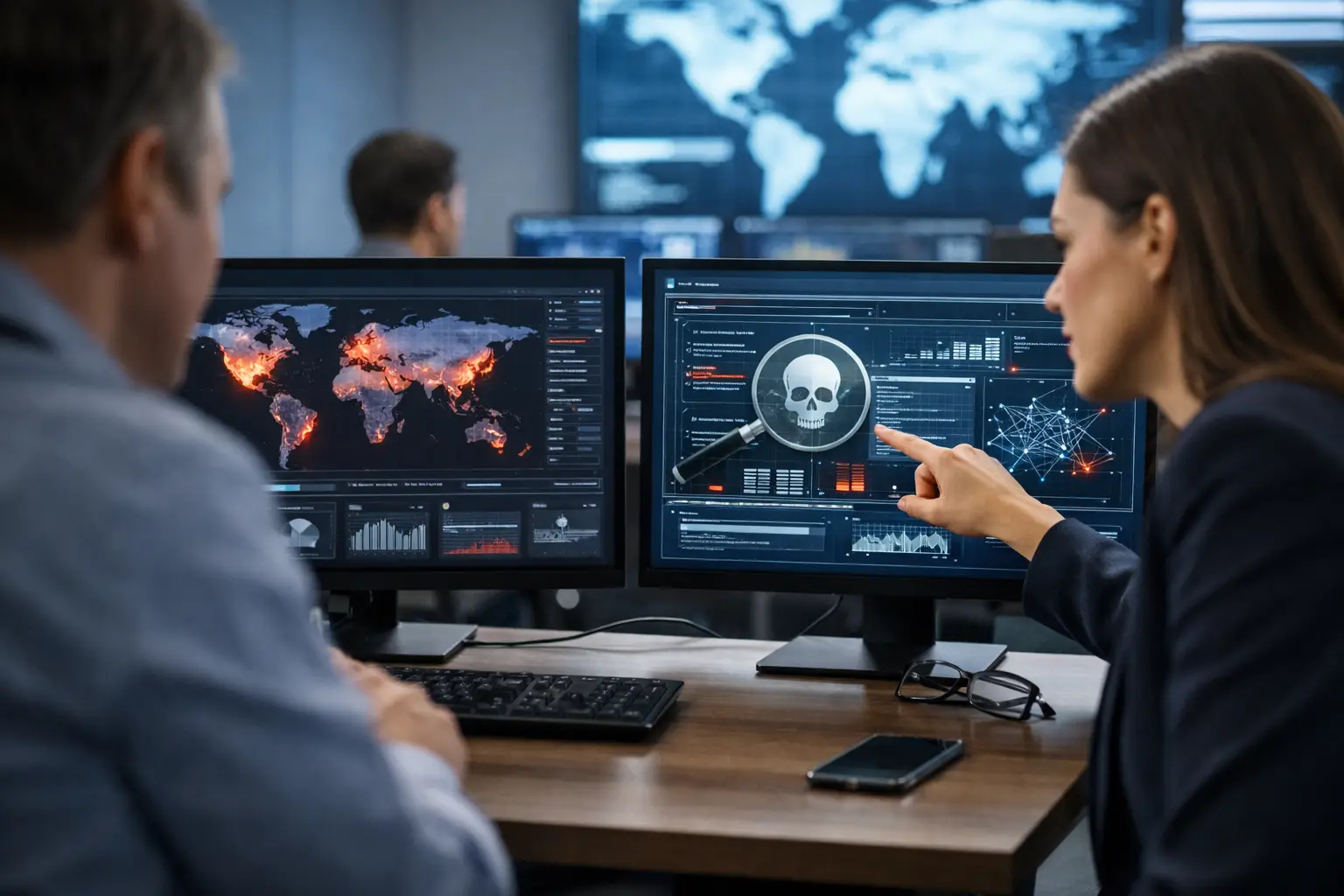
Pay attention to the operator experience. Can the team understand why an alert matters in seconds? Can they confirm relevance, contact stakeholders, document action, and close the loop from the same environment? If key steps require switching between email, spreadsheets, messaging apps, and separate case systems, response friction remains high.
Also ask about implementation. A sophisticated platform can fail if locations are not configured correctly, escalation paths are unclear, or employees do not know how to report a concern. The provider should support a practical rollout that includes risk categories, response ownership, alert thresholds, training, and periodic tuning.
The Trade-Off Between Breadth and Operational Fit
There is no universally best threat intelligence platform. Large global organizations may require extensive multilingual collection, international travel intelligence, and complex integrations. A regional employer may place greater value on workplace violence assessment, facility-specific alerting, and direct incident coordination. Families and high-profile individuals may prioritize discreet mobile protection, SOS support, and rapid access to verified assistance.
Cost should be assessed against the work the platform eliminates and the exposure it reduces. A lower-priced alerting tool may appear attractive until internal staff spend hours validating noise, recreating reports, and coordinating response across disconnected channels. Conversely, a highly specialized intelligence service may exceed the needs of a small team with limited operational maturity.
The strongest fit is a platform that matches the organization’s threat profile while supporting the full protection cycle: identify, verify, assess, escalate, respond, document, and improve. Risk Shield is designed around that operational model, combining AI-driven monitoring with human-verified analysis, location visibility, SOS capabilities, and centralized case management.
Choose for the Moment That Matters
The right platform should make security teams more decisive, not merely more informed. Before selecting a provider, test how it performs when the alert is credible, the location is exposed, leadership needs answers, and minutes matter. Choose the system that turns intelligence into accountable action – because prevention depends on what your team can do next.
