When a threat surfaces, a worker is injured, a student makes a concerning statement, or an executive protection team spots suspicious activity, the first few minutes shape everything that follows. That is where the question what is incident reporting stops being administrative and becomes operational. In security, safety, and risk management, incident reporting is the disciplined process of documenting an event so the right people can assess it, respond to it, investigate it, and prevent it from happening again.
A strong report does more than record that something happened. It captures who was involved, what was observed, when and where it occurred, what actions were taken, and what evidence exists. That information becomes the foundation for escalation, compliance, case management, trend analysis, and legal defensibility. Without it, teams are forced to make decisions from memory, scattered emails, text messages, or incomplete verbal updates.
What is incident reporting in practice?
At a basic level, incident reporting is the formal documentation of a safety, security, compliance, or operational event. The incident might be a workplace injury, threat, harassment complaint, suspicious person, cyber-related security concern, vehicle accident, property damage event, executive travel disruption, or emergency medical situation. The category changes by organization, but the purpose stays the same: create a clear, usable record that supports action.
In practice, incident reporting is not just filling out a form after the fact. It is part of an operating system for protection. The report triggers alerts, assigns ownership, preserves evidence, informs leadership, and establishes a timeline. In mature organizations, incident reporting connects directly to threat monitoring, emergency response, HR workflows, legal review, and after-action analysis.
That distinction matters. A note in a notebook is not a reporting system. A text thread with partial details is not a reporting system. If information cannot be verified, routed, searched, and acted on consistently, the organization is not really reporting incidents in a way that reduces risk.
Why incident reporting matters
The value of incident reporting shows up under pressure. When leaders need to know whether a situation is isolated or escalating, the report becomes the source record. When investigators need to reconstruct a sequence of events, the report anchors the timeline. When a regulator, insurer, or attorney asks what was known and when, the report often becomes critical evidence.
There is also a prevention function that many organizations underestimate. One report may seem routine. Ten similar reports across sites, shifts, or travel routes may reveal a pattern that requires intervention. That is how disciplined reporting turns isolated events into actionable intelligence.
For security teams, this means better escalation and faster coordination. For HR and workplace safety leaders, it means more consistent handling of complaints and behavioral concerns. For executive protection professionals, it means stronger visibility into precursor behavior, route disruptions, and suspicious contact. For individuals and families using safety technology, it means incidents are not lost in the moment. They are documented in a way that supports follow-up and response.
What should an incident report include?
The best reports are factual, specific, and immediate. They avoid speculation unless a statement is clearly identified as an assessment. They separate observed facts from secondhand accounts. And they capture enough detail to support both immediate action and later review.
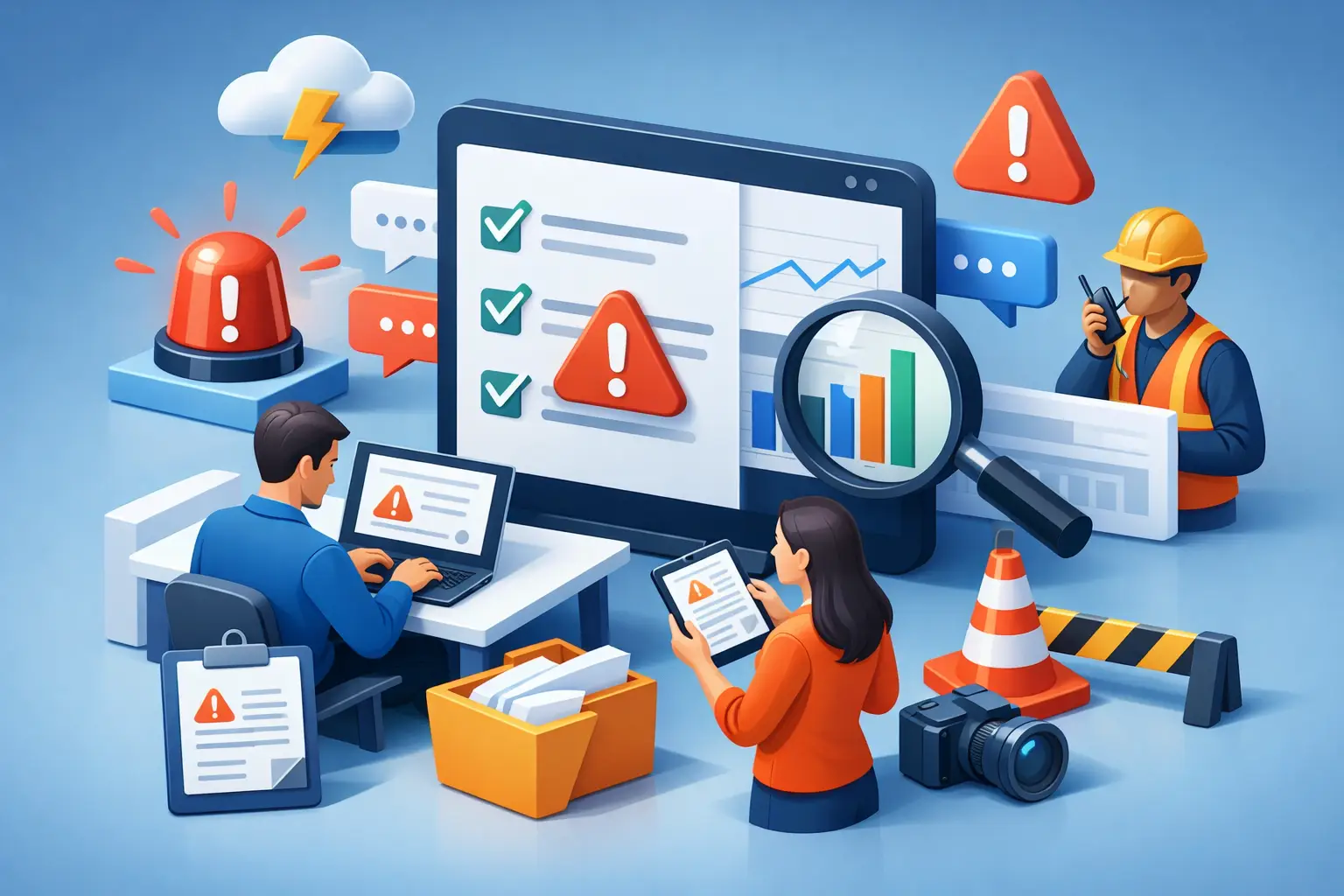
Most incident reports should include the date and time, exact location, names of involved parties and witnesses, a description of what happened, actions taken, injuries or losses, and any supporting evidence such as photos, video, screenshots, audio, or uploaded documents. If law enforcement, emergency services, supervisors, or outside partners were notified, that should be recorded as well.
The quality of the narrative matters. “Employee felt unsafe in parking lot” is not useless, but it is thin. A stronger report would note the time, lighting conditions, specific behavior observed, vehicle description, whether the subject approached anyone, whether security was dispatched, and whether camera footage exists. Better detail leads to better decisions.
At the same time, more information is not always better if it is unstructured. Long, emotional narratives can bury the facts. The goal is disciplined clarity. Teams need enough detail to act, but they also need consistency so reports can be reviewed across cases and locations.
The difference between reporting and responding
A common failure point is treating incident reporting as a substitute for response. It is not. If someone is in immediate danger, emergency action comes first. Medical care, evacuation, law enforcement notification, executive movement, site lockdown, or SOS activation may all need to happen before the report is completed.
But reporting cannot wait too long either. Memory degrades quickly. Small details disappear. Evidence gets overwritten or deleted. Witness statements become less reliable. The strongest programs are built around parallel action: respond to the immediate threat, then capture the incident quickly in a structured system.
This is why modern reporting tools matter. If a report can be submitted from the field, attached to evidence, and escalated to the right stakeholders in real time, the organization reduces the gap between event and action. That gap is where risk grows.
What is incident reporting for different types of organizations?
The answer depends on the environment. In a corporate setting, incident reporting often covers workplace injuries, threats, harassment, access control breaches, suspicious behavior, and travel-related disruptions. In schools and community settings, it may include behavioral warning signs, bullying, self-harm concerns, visitor issues, or emergency incidents. In executive protection, reporting often centers on surveillance detection, route anomalies, direct threats, hostile communications, venue concerns, and proximity incidents.
For families or high-net-worth individuals, the same principles apply, even if the reporting process is less formal. A suspicious encounter, stalking concern, travel disruption, or residence security issue should still be documented with time, place, evidence, and follow-up actions. Personal safety improves when information is organized, not just remembered.
What changes across these environments is not the need for reporting. It is the level of sensitivity, speed, and integration required. A multinational company may need centralized case management and trend analytics. A smaller organization may just need a secure, consistent workflow that leadership actually uses. It depends on threat exposure, regulatory obligations, and the consequences of missing signals.
Common mistakes that weaken incident reporting
The most damaging mistake is inconsistency. If one site reports everything and another reports almost nothing, leadership gets a distorted picture of risk. Underreporting is common when staff think an issue is too minor, fear retaliation, or believe nothing will happen after submission.
Another problem is vague language. Terms like “odd,” “aggressive,” or “concerning” can be useful starting points, but they need observable detail behind them. What exactly did the person say or do? What behavior changed? Who saw it? What happened next?
Delayed reporting is another major weakness. By the time a report is filed days later, evidence may be gone and response options may be limited. Finally, many organizations collect reports but fail to close the loop. If employees submit incidents and never see action, reporting culture erodes fast.
Building a reporting process that actually protects people
Effective incident reporting is part policy, part training, and part technology. The policy defines what must be reported and when. Training helps people recognize reportable events and document them clearly. Technology routes the report, preserves evidence, and creates accountability.
The strongest systems are simple enough to use under stress and structured enough to support analysis later. They allow mobile submission, evidence upload, escalation paths, status tracking, and role-based access. They also create a central record instead of fragmenting information across email, messaging apps, spreadsheets, and disconnected vendor tools.
This is where a unified security platform can change outcomes. When reporting is tied to threat intelligence, alerting, case management, and response workflows, organizations move from passive documentation to active risk reduction. That is a meaningful shift. The report is no longer a dead file. It becomes part of a live protective operation.
For teams responsible for employee safety, executive protection, or crisis readiness, that integration is not a luxury. It is how weak signals become visible before they become major incidents.
What is incident reporting ultimately designed to do?
At its core, incident reporting creates clarity when events are still unfolding and accountability after the moment has passed. It gives organizations a way to see patterns, defend decisions, support investigations, and protect people with more precision.
Not every incident will become a crisis. Some reports will document near misses, misunderstandings, or low-level concerns that never escalate. That is fine. A healthy reporting culture does not wait for certainty. It captures relevant facts early so trained professionals can assess risk with context instead of guesswork.
If your organization treats incident reporting as paperwork, it will get paperwork as a result. If it treats reporting as an intelligence function, it gains a stronger position to prevent harm, coordinate response, and make better decisions when pressure is highest. That is the standard serious security programs should aim for.
