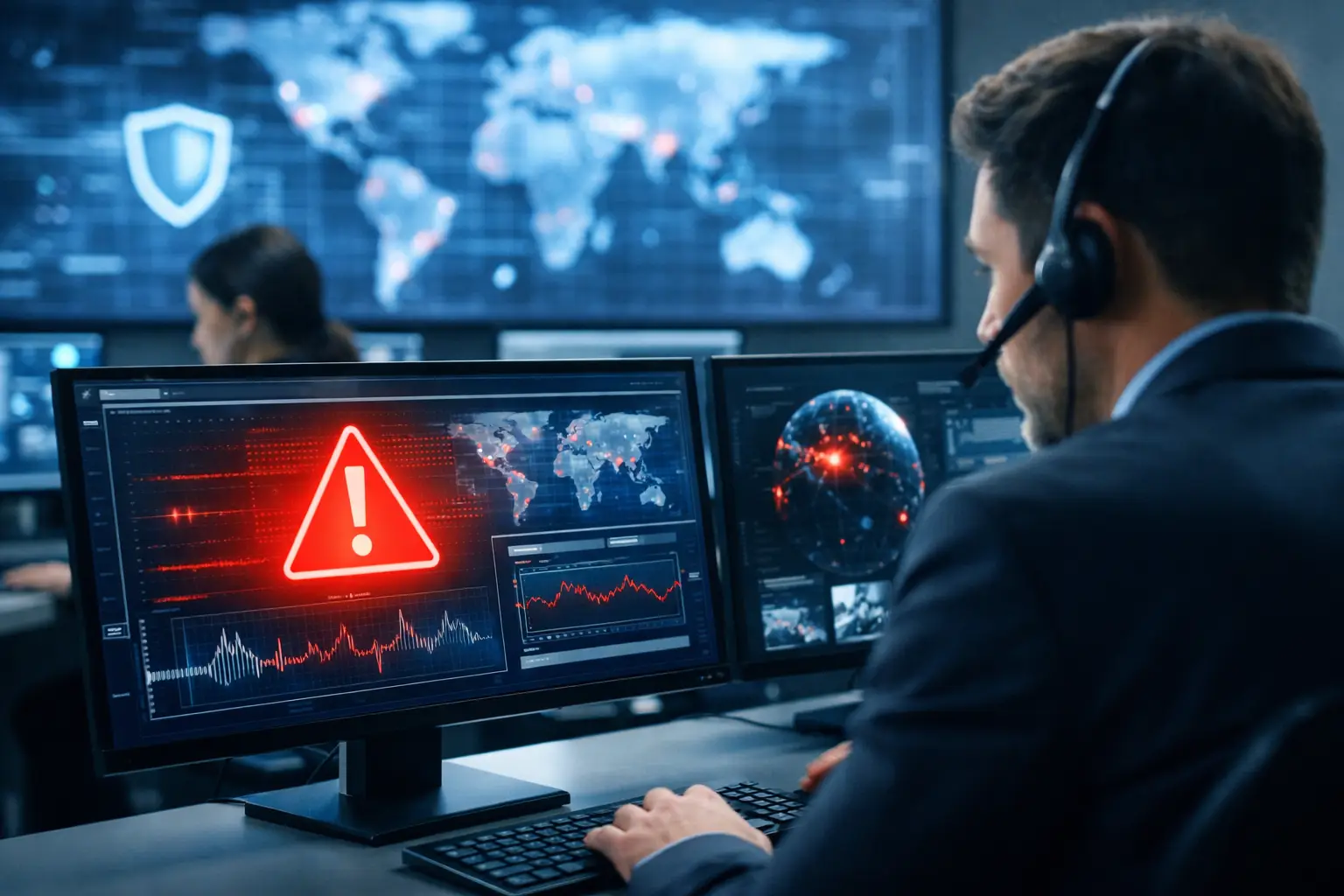
A threat rarely announces itself in a clean, orderly way. It starts as a fragment – a concerning post, an unusual pattern near a facility, a direct message to an employee, a travel disruption, a workplace grievance that shifts from verbal frustration to behavioral warning signs. Real time threat alerts matter because security decisions are often won or lost in that early window, when speed, context, and judgment have to work together.
For organizations responsible for people, sites, executives, and operations, delayed awareness creates exposure. The issue is not simply receiving more notifications. It is receiving the right signal fast enough to assess credibility, determine impact, and act before a threat escalates into an incident.
What real time threat alerts actually do
At their best, real time threat alerts give security teams an operational advantage. They turn scattered indicators into a usable warning. That may include location-based crime activity, severe weather, protest movement, online threats, workplace violence indicators, travel risk, or a developing event near an employee, executive, school, or facility.
The difference between an alert and intelligence is verification. A raw feed may tell you something happened somewhere. A true alerting capability helps answer the questions operators actually need: Is this credible? Who is affected? How close is it? Does it require escalation, monitoring, or immediate action?
That distinction matters because most security teams are not short on data. They are short on time, attention, and trustworthy prioritization. If every signal is treated like a crisis, teams burn out and eventually miss the event that counts.
The cost of late or low-quality alerts
A generic notification system can create a false sense of readiness. Leaders may assume they have coverage because a dashboard is active and messages are being sent. But when an alert arrives without context, without relevance to a person or place, or without a clear path to response, it does little to reduce risk.
In practice, poor alerting creates three common failures. The first is delay. Teams learn about an event after employees have already been exposed, after misinformation has spread, or after a local issue has become a reputational or operational problem. The second is noise. Analysts and security managers spend their time sorting through irrelevant events instead of managing real exposure. The third is fragmentation. Threat awareness, communications, incident logging, and response coordination sit in different tools, which slows action and weakens accountability.
This is where many organizations get stuck. They invest in monitoring but not in decision support. They can see activity, but they cannot move on it with confidence.
Real time threat alerts need context, not just speed
Speed matters. Speed without relevance is just interruption.
A useful alert should tell a security leader whether the event intersects with their environment. That could mean a threat near a corporate office, a protest on an executive travel route, an active incident near a school pickup location, or escalating digital harassment aimed at an employee. Context turns an alert from information into an operational trigger.
Location awareness changes the value of the alert
Location intelligence is one of the clearest ways to separate meaningful alerts from background noise. If an incident occurs across the country, it may be worth tracking but not escalating. If it occurs two blocks from a facility, on a route used by a principal, or near a traveling employee’s hotel, the response threshold changes immediately.
This is especially important for distributed organizations. A national employer, school network, healthcare group, or executive protection team cannot rely on a one-size-fits-all warning model. They need visibility tied to where their people and assets actually are.
Verification reduces false positives
Automated systems can process volume faster than any human team. They can flag anomalies, correlate data, and push alerts within seconds. But automation alone has limits. Public reports can be wrong. Social posts can be staged, misinterpreted, or amplified without evidence. Local incidents can appear larger online than they are on the ground.
That is why human review remains critical in high-stakes environments. The strongest model combines AI-driven detection with analyst verification, so teams receive alerts that are both timely and credible. That reduces false positives and helps decision-makers act with discipline instead of reacting to every spike in activity.
Who benefits most from real time threat alerts
Corporate security teams are an obvious fit, but the value extends well beyond traditional security departments. HR leaders and workplace violence prevention teams need early warning when employee behavior, threats, or grievances start crossing risk thresholds. Executive protection professionals need immediate awareness of route disruptions, hostile attention, and venue-area incidents. School and community safety leaders need faster visibility into nearby events that may affect students, staff, and parents. Families and individuals with elevated exposure need alerts that support practical decisions, not abstract awareness.
The common thread is duty of care. If you are responsible for protecting people, waiting for a situation to become obvious is not a strategy.
What strong alerting looks like in practice
Strong real time threat alerts do more than push notifications. They support a sequence of action.
First, the alert reaches the right person quickly. Not every event should go to everyone. Escalation paths need to match the seriousness of the threat and the roles involved.
Second, the alert includes enough context to support triage. Teams should be able to see what happened, where it happened, who may be affected, and why it matters.
Third, the alert connects to response workflows. If a security team has to leave one system to document the event, another to message stakeholders, and another to track follow-up, precious time is lost. Integrated workflows matter because response is rarely just one decision. It is a chain of decisions made under pressure.
Fourth, the system should preserve evidence and incident records. That matters for investigations, compliance, workplace actions, after-action review, and future trend analysis.
When these pieces work together, alerting becomes part of prevention rather than a passive feed.
Why fragmented systems create security blind spots
Many organizations still manage safety and threat information across separate tools – email, messaging apps, physical security platforms, spreadsheet logs, travel updates, and public alert feeds. Each tool may serve a purpose, but fragmentation makes coordinated action harder.
A threat to an employee can begin online, move into the workplace, and end in a legal or HR process. An executive travel disruption may involve intelligence monitoring, route adjustment, direct outreach, and incident documentation. If those activities are disconnected, teams lose time and leadership loses visibility.
A unified approach allows operators to see the alert, assess it, escalate it, document it, and track outcomes in one operational picture. That is not just more efficient. It strengthens accountability and gives leadership a clearer understanding of risk exposure over time.
Choosing a real time threat alerts solution
Not every organization needs the same alerting model. A small firm with a limited travel profile may need focused location-based awareness and emergency support. A multinational enterprise may need broader monitoring, role-based escalation, and integration into existing security operations. A family office may care more about executive movement, residential proximity alerts, and discreet response support.
The right question is not, “Does this platform send alerts?” Most do. The better question is, “Does this help us make faster, better protection decisions?”
When evaluating options, look closely at signal quality, geographic relevance, analyst support, escalation workflows, evidence handling, and the ability to tie alerts to broader incident management. If the tool generates volume without clarity, it may add work instead of reducing risk.
This is one reason hybrid models stand out. A platform that combines automated monitoring with human-verified review is better positioned to serve organizations that cannot afford guesswork. Risk Shield operates in that space because serious threat monitoring is not just a data problem. It is a judgment problem.
Real time threat alerts are a prevention tool
Too many teams still view alerting as a last-mile communication feature – something that activates after a crisis has already taken shape. That is too narrow.
Used properly, real time threat alerts support prevention. They help teams identify hostile patterns earlier, recognize proximity risk faster, intervene before behavior escalates, protect travelers and executives more effectively, and coordinate response with a clearer chain of command. They also create a record of what was known, when it was known, and how the organization responded.
That matters after the incident, but it matters even more before one.
The most effective security posture is not built on reacting well once harm is underway. It is built on seeing more, sooner, and acting with enough clarity to change the outcome.
